



What Makes Ketamine-Assisted Psychotherapy (KAP) Unique?
Ketamine-assisted psychotherapy (KAP) is increasingly discussed as ketamine treatment becomes more widely available within mental health care. However, ketamine can be delivered in several different ways - from infusion-only protocols to medication-first approaches.
What distinguishes ketamine-assisted psychotherapy is not simply the medicine itself, but the clinical model surrounding it. KAP integrates medically supervised ketamine with structured psychotherapy in a way that prioritizes preparation, integration, and the therapeutic relationship.
In this model, ketamine is used as an adjunct to psychotherapy rather than a standalone treatment. The medicine may create psychological openness and flexibility, while psychotherapy provides the structure needed to translate those experiences into meaningful behavioral and relational changes.
The principles below help explain what makes the ketamine-assisted psychotherapy model distinct.
10 Clinical Principles of Ketamine-Assisted Psychotherapy (KAP)
1. KAP Is a Form of Psychedelic-Assisted Psychotherapy
Ketamine-assisted psychotherapy belongs to the broader category of psychedelic-assisted psychotherapy (PAP). In this model, psychedelic medicines are used to augment psychotherapy within a structured therapeutic framework.
Rather than functioning as a medication delivered in isolation, the medicine is embedded within a broader psychotherapeutic process.
Journey Clinical was created to be the infrastructure and care delivery model for all FDA-approved psychedelic-assisted psychotherapy (PAP). In 2026, there are over 100 clinical trials with psychedelic drugs.
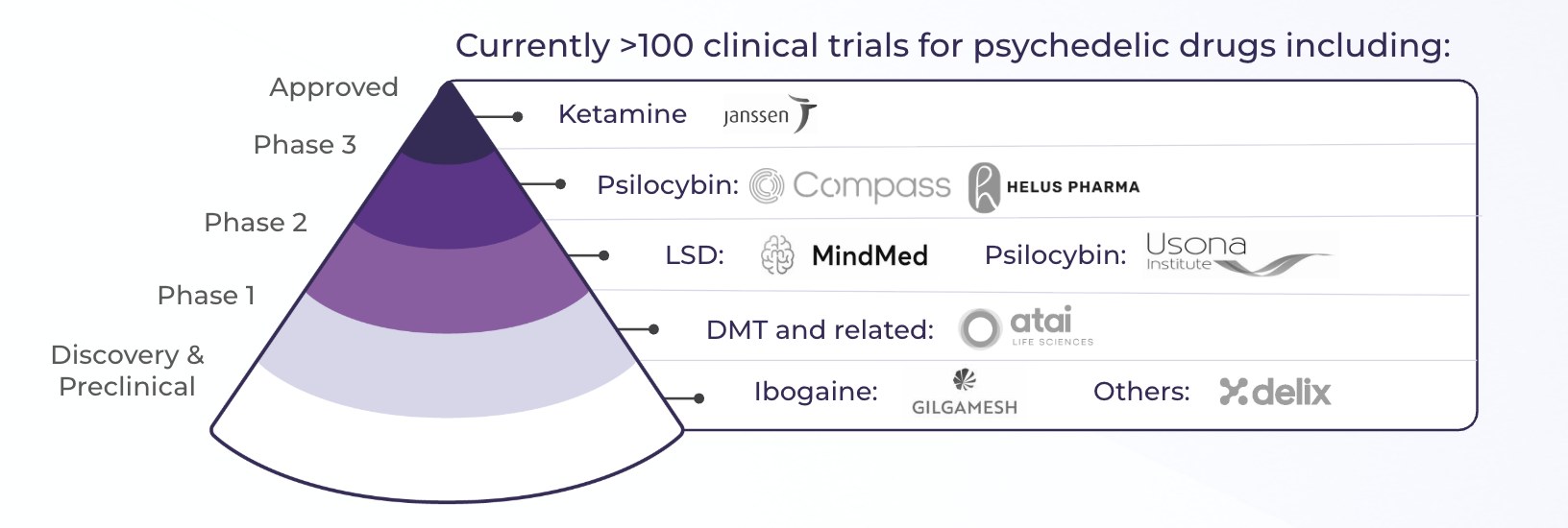
If you'd like to learn more, take a look at the full psychedelic drug development pipeline (updated as of 2026 Q1) on Psychedelic Alpha.
2. KAP Integrates Psychiatry and Psychotherapy
Ketamine-assisted psychotherapy combines medical oversight with licensed psychotherapy. Patients typically work with a care team that includes:
• a medical prescriber (MD, DO, or PMHNP)
• a licensed psychotherapist
This collaborative model allows clinicians to coordinate ketamine treatment, psychotherapy, and psychiatric medication management when appropriate.
3. Ketamine Is Used as an Adjunct to Psychotherapy
In KAP, ketamine supports psychotherapy rather than replacing it.
The medicine may increase emotional openness and flexibility, which can allow patients to engage more deeply in therapeutic work. However, psychotherapy remains the primary vehicle for psychological change.
For a comparison with other ketamine treatment models, see our comparison guide: KAP vs At-Home Ketamine vs IV Ketamine vs Spravato.
4. KAP Is a Therapist-Led Treatment Model
Ketamine-assisted psychotherapy is fundamentally therapist-led.
A licensed mental health professional guides the therapeutic process through preparation, therapeutic presence during dosing sessions, and integration afterward. The therapist, marked by presence, attunement, and restraint, often plays a significant role with KAP.
5. The Therapeutic Alliance Is Foundational
The therapeutic alliance — the trust-based relationship between patient and therapist — is a central component of KAP.
Research across psychotherapy and psychedelic-assisted treatments suggests that stronger therapeutic alliances are associated with better treatment outcomes. The relationship creates the psychological safety necessary for deeper emotional exploration.
Learn more about why the therapeutic alliance matters with KAP.
6. Preparation and Integration Are Essential
Preparation and integration sessions are core components of the KAP model, not optional additions.
Preparation creates the conditions in which the patient’s innate capacity for insight, emotional processing, and self-regulation - can emerge.
Integration sessions help patients process ketamine-related experiences and translate insights into lasting changes in behavior, relationships, and daily life.
Learn more about Preparation and Integration in KAP.
7. KAP Is Delivered Within a Structured Clinical Framework
Ketamine-assisted psychotherapy is delivered within a structured clinical setting that includes:
• medical screening and clearance
• informed consent
• prescribing oversight
• clinical monitoring
• outcome tracking
This framework helps ensure that treatment is delivered responsibly and safely.
8. KAP Targets the Emotional and Cognitive Drivers of Symptoms
KAP goes beyond symptom reduction.
Through psychotherapy, patients work to understand and shift entrenched emotional and cognitive patterns that contribute to mental health conditions such as depression, anxiety, and trauma-related symptoms.
9. Psychotherapy Occurs During a Window of Neuroplasticity
Ketamine may temporarily increase neuroplasticity, the brain’s capacity to form new neural connections.
When psychotherapy occurs during this window, patients may be better able to reflect on entrenched patterns, develop new perspectives, and integrate insights into everyday life.
To learn more about the neuroscience, see Ketamine and the Brain.
10. KAP Prioritizes Integrated and Sustainable Change
The goal of ketamine-assisted psychotherapy is not the intensity of the dosing experience.
Instead, KAP prioritizes integrated and sustainable outcomes. The therapeutic process emphasizes reflection, continuity, and meaningful psychological change over time.
How KAP Fits Within Interventional Psychiatry
Ketamine-assisted psychotherapy sits at the intersection of interventional psychiatry and psychotherapy.
Interventional psychiatry uses targeted biological treatments — such as ketamine, transcranial magnetic stimulation (TMS), or electroconvulsive therapy (ECT) — to address complex psychiatric conditions.
KAP differs from many interventional approaches by embedding the biological intervention within an ongoing psychotherapeutic process.
Learn more about where KAP fits in mental healthcare today.
Final Takeaway
Ketamine-assisted psychotherapy is more than ketamine treatment.
It is a therapist-led clinical model that integrates medically supervised ketamine with structured psychotherapy, combining biological intervention with relational depth and psychological integration.
By pairing ketamine with preparation, integration, and an ongoing therapeutic alliance, KAP aims to support deeper and more durable clinical change.
Related articles
• ketamine-assisted psychotherapy research
• ketamine-assisted psychotherapy for anxiety
• preparation and integration in KAP
• how KAP works at Journey Clinical
ketamine-assisted psychotherapy (KAP) for depression and treatment-resistant depression
ketamine-assisted psychotherapy for PTSD and trauma
Wondering if Ketamine-Assisted Psychotherapy may be right for you? Browse our directory of psychedelic therapists
Are you a therapist looking to integrate ketamine-assisted psychotherapy in your private practice? Book a demo with our team to learn more