


Introduction
Ketamine-Assisted Psychotherapy (KAP) is an evidence-informed treatment approach that may help reduce PTSD and trauma-related symptoms for some people by supporting neuroplasticity, fear extinction, and psychological flexibility. For people who have tried therapy, medication, or trauma-focused treatment without lasting relief, KAP can open a therapeutic window where processing becomes possible and where the grip of traumatic memory may begin to loosen.
Below is a comprehensive, research-backed guide to KAP for PTSD and trauma - written to support patients, therapists, and clinicians seeking safe, responsible, and evidence-based information.
What is Ketamine-assisted psychotherapy (KAP)?
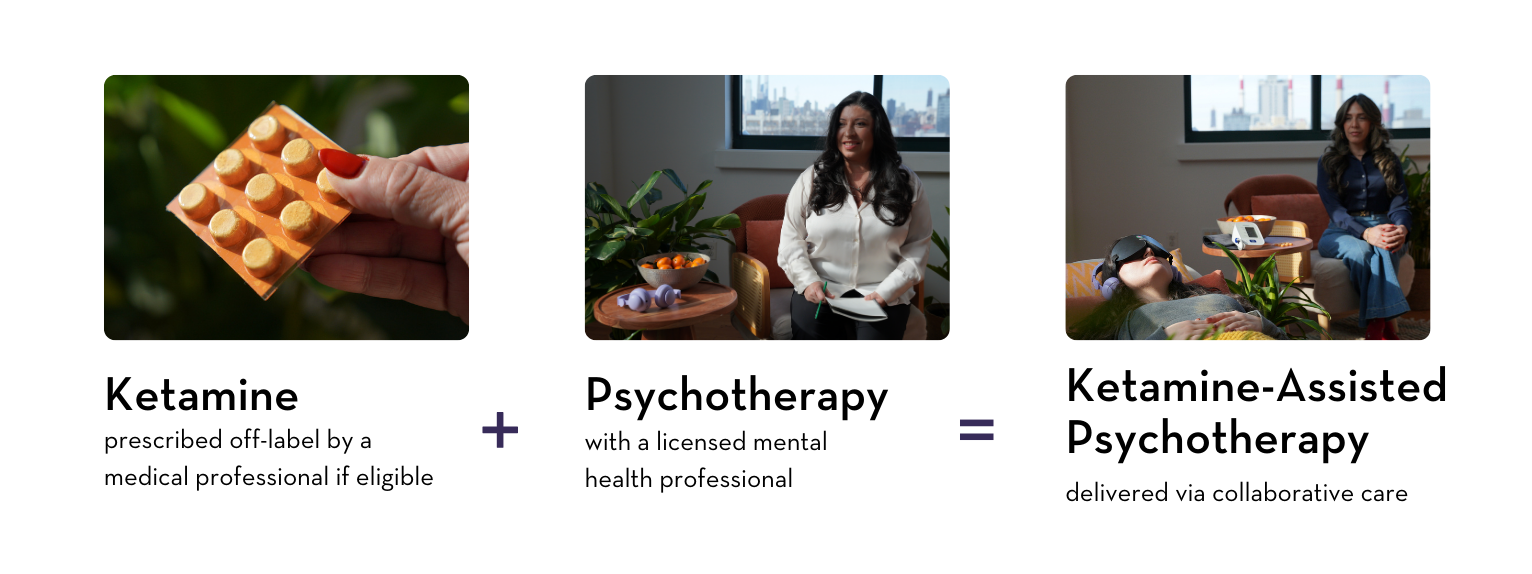
Ketamine-assisted psychotherapy (KAP) for PTSD and trauma is a treatment model that combines medically supervised ketamine with structured psychotherapy sessions. The medication temporarily increases neuroplasticity - your brain’s ability to form new patterns - while therapy helps patients process anxiety, reframe fear responses, and build healthier emotional regulation strategies.
Read our full article learn more about KAP as a treatment model in detail.
Why Consider KAP for PTSD and Trauma?
PTSD is a serious and often chronic condition. According to the National Alliance on Mental Illness (NAMI) “about 4.1% of the U.S. adult population (over 8 million people) experiences PTSD.”. For example, it can affect veterans, survivors of sexual violence, and first responders. While many people benefit from trauma-focused psychotherapy and medication, a significant portion continue to struggle with symptoms such as:
- Intrusive memories, flashbacks, or nightmares
- Hypervigilance and exaggerated startle response
- Emotional numbing or detachment
- Avoidance of trauma reminders
- Negative alterations in mood and cognition
- Difficulty trusting others or feeling safe
- Sleep disturbances and somatic symptoms
- Shame, guilt, or a distorted sense of self
Only two medications — the SSRIs sertraline and paroxetine — are FDA-approved for PTSD treatment, and approximately 60% of patients respond to SSRIs, with only 20–30% achieving complete remission following pharmacotherapy.Traditional treatments can be life-changing, but they may not work for everyone — or may not create enough safety and momentum for sustained trauma processing. KAP is one option patients explore when they feel stuck, when symptoms remain significant, or when prior treatments have produced limited relief.
KAP is designed to work on two levels:
- Biological: Ketamine may support rapid shifts in glutamate signaling and synaptic neuroplasticity — and may specifically facilitate fear extinction and the reconsolidation of traumatic memories, mechanisms particularly relevant to PTSD.
- Psychological: Psychotherapy can help patients use the treatment window to process traumatic material, revise survival-based patterns, and translate insights into behavioral and relational change.
For many patients, KAP can create a sense of distance from traumatic memories — where what once felt overwhelming becomes more approachable, and where the nervous system begins to register safety in a way it previously could not. This can make trauma-focused therapy more effective, emotional processing more accessible, and meaningful change more sustainable.
How KAP Works for PTSD (The Science Explained Simply)
PTSD is maintained by predictable patterns in the brain: a hyperactive fear response, disrupted memory consolidation, reduced prefrontal control over the amygdala, and a nervous system locked in threat-detection mode. KAP can interrupt these patterns and may allow new ones to form. Here's how:
#1 Ketamine facilitates fear extinction
Systemic ketamine appears to facilitate NMDA receptor–mediated neuroplasticity in the prefrontal cortex, which plays a central role in fear extinction. In practical terms, this may enable patients with PTSD to update threat associations—learning that cues once linked to danger are now safe—thereby lowering the threshold for effective trauma processing (link to research: Psychiatry Online).
#2 Ketamine may act on traumatic memory reconsolidation
Research shows that recalled memories enter a temporary, modifiable state before being reconsolidated. This creates an opportunity to update how the memory is encoded, including its emotional tone. In the context of ketamine-assisted therapy (KAP), ketamine may facilitate this window, enabling patients to process traumatic memories with reduced emotional reactivity (link to research: Nature).
#3 Ketamine increases neuroplasticity
Ketamine may reduce traumatic memories and fear, attributed to its action on synaptic pathways in key brain regions including the hippocampus, basal ganglia, amygdala, and prefrontal cortex. (link to research:PubMed Central )These are precisely the regions most disrupted by trauma. By promoting neuroplasticity in these areas, ketamine may support the brain's capacity to form new, less fear-dominated associations.
#4 The altered state created by ketamine can be therapeutically meaningful
Ketamine produces short-term dissociative effects — altered perceptions of self, time, and environment. In traditional ketamine infusion settings, dissociation and other altered states are often viewed as side effects to be minimized, managed with medication, or simply monitored until they pass. In KAP, however, these experiences are approached as potentially meaningful therapeutic states that can support insight, emotional processing, and psychological change. What KAP adds is preparation and integration: patients arrive knowing what to expect, and they return to process what arose. Shifts in perspective, emotional releases, and moments of insight that occur during dosing become material for the therapeutic work. This is a fundamental difference between KAP and ketamine infusion clinics where little or no therapeutic support is included.
#5 Emotional regulation improves
A core feature of PTSD is disrupted arousal regulation, with fluctuations between hyperarousal and hypoarousal that reduce the patient’s capacity to tolerate and process trauma-related experiences. KAP may temporarily recalibrate the stress response system, reducing hyperarousal and restoring some capacity for emotional range. By creating greater internal safety, some patients find they can approach traumatic memories, reflect on their experiences, and engage more fully in therapy.
#6 Psychotherapy becomes more effective
By increasing neuroplasticity, ketamine may lower barriers to engaging in trauma-focused modalities (e.g., EMDR, prolonged exposure, CPT, somatic therapies), enabling greater participation with less avoidance. In KAP, psychotherapy is the mechanism through which these transient neurobiological effects are translated into durable clinical change.
What the Research Shows About Ketamine and KAP for PTSD
A growing body of peer-reviewed clinical research - including randomized controlled trials, open-label investigations, and real-world clinical analyses - supports ketamine's efficacy for PTSD and trauma-related conditions. This is particularly meaningful given how limited the existing pharmacological options for PTSD have historically been, and how many patients continue to struggle despite first-line treatments.
Ketamine produces rapid reductions in PTSD symptoms
Research: https://www.sciencedirect.com/science/article/abs/pii/S0166432822000729
All five qualified randomized clinical studies showed rapid and clear benefits of ketamine infusion for PTSD symptoms resistant to conventional medications. Clinical improvements were evident in three of the four PTSD symptom categories: intrusions, avoidance, and negative alterations in cognitions and mood.
An 80% response rate in resistant PTSD
Research: https://www.sciencedirect.com/science/article/abs/pii/S0166432822000729
Ketamine infusion showed an 80% response rate in treatment-resistant PTSD, with a fast (within the first 24 hours), safe, and potent role in improving symptoms. This is a notably high response rate for a population that has often exhausted standard treatment options.
Combining ketamine with psychotherapy enhances outcomes
Research: https://www.sciencedirect.com/science/article/abs/pii/S0166432822000729
A 2025 open-label trial evaluated the combination of ketamine infusions with Written Exposure Therapy for chronic PTSD, finding that the combination produced meaningful symptom reductions. A 2025 study on ketamine-assisted EMDR Therapy similarly investigated synergistic effects of pharmacotherapy and psychotherapy for PTSD. Prolonged effects and lower relapse rates were observed when ketamine infusion was combined with psychotherapy.
Ketamine addresses all major PTSD symptom clusters
Research: https://www.mdpi.com/2076-328X/14/8/717
Patients benefited from immediate positive effects, including a decrease in tension, anxiety, intrusions, and other common symptoms associated with PTSD. The immediate reduction in intrusions can be attributed to ketamine's role as an NMDA receptor antagonist, as the activation of this receptor is linked to an increase in intrusive memories.
Note: The research on KAP for PTSD is growing rapidly and findings are consistently encouraging. That said, most studies to date involve relatively small samples, and methodological variation across trials makes direct comparison difficult. Larger randomized controlled trials using standardized protocols are still needed. Journey Clinical's approach is grounded in the best available clinical evidence — and updated as that evidence evolves.
Expected Outcomes for PTSD and Trauma
While no treatment works for everyone and outcomes are specific to each person, patients often report:
Within hours–days:
- Reduced hyperarousal
- Emotional softening
- Decreased sense of threat
- Increased sense of safety and calm
Within weeks:
- Reduced frequency and intensity of intrusions and flashbacks
- Decreased avoidance
- Improved emotional regulation
- Better sleep
- Stronger coping skills
- Greater capacity for trauma processing in therapy
- More effective therapy sessions
A note on treatment-resistant PTSD: Randomized controlled trials demonstrate meaningful symptom reductions in treatment-resistant PTSD populations, including improvements across intrusion, avoidance, and mood symptom clusters (Feder et al., 2014, JAMA Psychiatry). Ketamine’s mechanism—NMDA receptor antagonism associated with enhanced neuroplasticity and facilitation of fear extinction—differs fundamentally from SSRIs and may help explain its effects in patients who have not responded to standard treatments (Krystal et al., 1994). While outcomes vary, clinical trials have shown significant symptom improvement in chronic PTSD populations, including individuals with prior treatment resistance (Feder et al., 2021, American Journal of Psychiatry)
Among others, the durability of outcomes is influenced by:
- Integration therapy
- Frequency of sessions
- Engagement with self-care and lifestyle practices
PTSD doesn't change in a straight line — below are examples of how core trauma symptom domains can evolve during treatment.
Who Is a Good Candidate for KAP for PTSD and Trauma?
KAP may be a good fit if you experience:
- Post-traumatic stress disorder (PTSD)
- Complex PTSD (C-PTSD) or developmental trauma
- Trauma related to sexual violence, abuse, or neglect
- Combat or military-related PTSD
- First responder or occupational trauma
- Grief-related trauma or traumatic loss
- Medical trauma or trauma related to serious illness
- Identity-based or racial trauma
- PTSD resistant to medication or therapy
- PTSD with comorbid depression or anxiety
Note that PTSD rarely exists in isolation. It is commonly comorbid with other mental health and medical conditions, including depression, anxiety and panic disorders, substance use disorders, chronic pain, sleep disorders, dissociative disorders, eating disorders, or long-term burnout, among others. Therefore, it is important to work with your psychotherapist on all symptoms by taking a comprehensive, integrated approach rather than focusing narrowly on PTSD alone, allowing for accurate assessment, appropriate prioritization of treatment targets, and coordinated interventions that address the full clinical picture and underlying drivers of distress.
To be eligible for treatment, you must also be:
- Engaged in psychotherapy
- 18+ years old
- Medically cleared (on a case by case basis based on the patient's unique history)
- Have an eligible diagnosis
- Assessed for safety and clinical appropriateness by your treating clinician
Related Resources:
When KAP Is Not Recommended?
Among others, KAP may not appropriate for individuals with unstable medical conditions, contraindicated psychiatric disorders or uncontrolled substance use disorder, including and not limited to:
- Uncontrolled hypertension or some hypertensive conditions
- Severe breathing problems
- Uncontrolled glaucoma
- Other unstable medical conditions (e.g. recent traumatic injury or certain cardiovascular conditions etc.)
- Acute mania or mixed state
- History of primary psychotic disorder
- Active suicidal ideation or severe psychiatric instability
- Active ketamine use disorder
- Ketamine allergy or hypersensitivity
- Pregnancy
These are evaluated during your medical intake by medical professionals alongside any other contraindications based on a full medical and psychiatric history.
This content is intended for informational purposes only and is not a substitute for professional medical advice. Whether KAP is right for you is determined individually by a licensed clinician based on your full medical and psychiatric history.
Ketamine Risks & Side Effects
Ketamine has a well-characterized safety profile, with over 50 years of use in anesthesia and emergency medicine, and an expanding evidence base supporting its rapid and sustained antidepressant effects at subanesthetic doses when administered under appropriate clinical monitoring. Across clinical applications, its safety profile is generally described in the literature as:
- Well-tolerated in controlled, clinician-supervised settings
- Rapidly cleared from the body (short half-life, effects are time-limited)
- Transient side effects are common, predictable, and dose-dependent
- Serious adverse events are rare when medical screening and monitoring protocols are followed
- Blood pressure elevation is the most clinically relevant physiologic effect, which is why protocols include blood pressure and heart rate checks before and after dosing
- Risk of dependence and bladder complications are primarily associated with frequent, chronic, unsupervised use, not with typical medical protocols
Common short-term side effects (most often during or within a few hours) include
- Dissociation (feeling detached, “dreamlike,” time distortion) FDA Access Data+1
- Sedation / sleepiness / fatigue FDA Access Data
- Dizziness / vertigo / unsteadiness PMC+1
- Nausea (sometimes vomiting) PMC+1
- Headache Nature
- Blurred vision / feeling “off” PMC+1
- Altered body awareness and spatial orientation.
These effects are typically dose-related and time-limited, which is why many protocols include monitoring after dosing. In controlled clinical settings, these are often described as transient and generally mild–moderate, but they still matter for safety planning (no driving same day, fall risk precautions, etc.).
In summary, the clinical safety profile of ketamine is well-established when delivered under medical supervision, including systematic screening, monitoring, and human clinician approval for treatment plans and medication adjustments.
What a KAP Treatment Looks Like (Step-by-Step)
Ketamine-Assisted Psychotherapy (KAP) is a therapist-led mental health treatment model that integrates both psychiatry (medical clearance, prescribing and ongoing monitoring) and psychotherapy (preparation, dosing, and integration sessions). You have a dedicated care team of experienced clinicians here to support you throughout your treatment.
Step 0: Choose your therapist
- Before you initiate treatment, you choose a psychotherapist that matches your preference (e.g. location, specialty, insurance). The therapeutic alliance is essential to the successful completion of treatment. Important distinction: The therapeutic component—not the medication alone—is what differentiates KAP from non-therapist ketamine treatment models. KAP is uniquely structured for emotional change, not only symptom reduction. The therapist’s role is not to direct the experience, but to provide psychological safety, trust, and support when needed. Read the full article on why the therapeutic alliance matter.
Step 1: Medical clearance & treatment planning
- During this initial psychiatry visit, a qualified medical clinician evaluates your health history and symptoms to determine whether KAP is appropriate and safe for you. If eligible, you receive a personalized KAP treatment plan including a prescription for ketamine lozenges (or other approved ketamine formulations).
Step 2: Therapist-led preparation sessions
- These psychotherapy sessions are similar to traditional therapy and tailored to psychedelic-informed care. You and your therapist explore:
- Your intentions for treatment
- Any fears or concerns about the experience
- Emotional readiness and trust-building
- What support you may need during dosing
Step 3: Dosing session with monitoring & support from therapist
- A typical ketamine dosing session lasts between 1-3 hours and can take place either in-person in your therapist office or remotely via telehealth. During a dosing session, patients self-administer their ketamine lozenges. Typically, patients are in a comfortable, reclining position wearing an eye mask and listening to calming music. Although a dosing session may be largely an internal experience, the therapist is present the entire time to hold space and provide support as needed. Common experiences may include:
- Visual imagery or dream-like scenes
- Emotional insights
- Shifts in perspective
- Relaxation or lightness
- Temporary dissociation
Step 4: Integration sessions for durable change
- Within the days following dosing, you meet again with your therapist to process and translate what emerged into meaningful, lasting change typically with whatever therapeutic modality your therapist utilizes. This is where transformation becomes durable. Integration often includes:
- Exploring the memories and insights that surfaced
- Understanding emotional or cognitive shifts
- Translating insights into behavioral and emotional change
- Reinforcing coping strategies and mental health progress
Integration supports durability in KAP treatment, similar to the role of integration in other psychedelic therapy models like psilocybin-assisted psychotherapy and MDMA-assisted therapy in clinical trials.
Step 5: Follow-up with the medical team
- You continue to follow-up with your dedicated medical professional to monitor safety, progress and outcomes of the treatment. They will prescribe medication refills as appropriate according to your treatment plan. For optimal treatment, it is recommended that your clinician manages all of your psychiatric medications.
While each treatment plan is personalized for each patient, it is common for a full KAP treatment to include 1 medical intake consultation, 1-3 preparation sessions with your therapist, 6-8 dosing sessions with at least 1 integration sessions between each dosing session and a follow-up visit with your medical provider. Maintenance dosing may be considered afterward by your medical professional if appropriate.
Insurance & Cost
Understanding the financial investment for Ketamine-Assisted Psychotherapy (KAP) is an important part of planning your mental health care journey. Unlike many traditional therapy services, KAP involves both medical and therapeutic components — and because of that, insurance coverage and out-of-pocket costs may vary.
Important clarification: the medication ketamine itself is inexpensive in most formulations. What elevates the cost for KAP is clinical time, monitoring, integration support, and medical oversight — not the base price of the drug.
It is common for the full course of treatment of KAP to include:
- Matching patient with a therapist who accepts the patient’s insurance
- 4-6 months of treatment
- 2 medical consultations
- ~25 hours of psychotherapy with a KAP trained licensed psychotherapist
- Ketamine medication for 8 dosing sessions
In this case, the treatment would range from $1400-$1900 with insurance. Payment plans and financing can be available for patients to increase accessibility. To initiate treatment, a patient could make an upfront payment ~$120 followed by an agreed upon payment plan, if eligible for treatment,
Your care team would be able to guide you through your options.
Therapist Insights & Patient Stories
Kelly Rein, LCSW Specializing in compassion-focused, attachment and trauma therapy shared:
“My client beautifully navigated back through her childhood, sharing that she was able to go back and see fully and witness all of what she had been through. She has a felt sense of compassion “you went through so much.” She reported new insights about wanting to rewrite her life story with mantra "I am powerful" rather than remaining in a victim narrative. This evolved into releasing power but feeling peace during her second integration. She expressed readiness to let go of blame related to past unhealthy relationships and family trauma, in part by forgiving the younger-versions of those family members in her journey. She noted exhaustion post-journey but in a relieving way, as if weight had been lifted.”
Watch short video on how a Marine Veteran Found Personal Healing with Ketamine-Assisted Psychotherapy (KAP):
Listen directly to KAP prescriber on how KAP helps with trauma reprocessing. Samantha Stroeh PMHNP-BC explains the science behind trauma reprocessing, memory reconsolidation and neuroplasticity:
Hear directly from a therapist how KAP can help with trauma. Margot Kahn LMFT explains how KAP helps her clients.
Alternative Options & Comparison (beyond ketamine)
According to the National Alliance on Mental Illness (NAMI), "there are many well-studied treatment approaches that can address PTSD symptoms. The best treatment plan will include recommendations from a health care provider, your preferences related to therapy and medication, and consideration of other conditions you may have. Most people find a combination of two approaches — psychotherapy and medication — offers the best results."
Among others, ketamine treatment can be helpful to patients who suffer from PTSD or trauma. See below some examples of various ketamine treatments.
KAP vs at-home ketamine vs. IV Ketamine vs Spravato®
.png)
Relief vs. deeper therapeutic healing: Other ketamine treatments focus on symptom relief. In contrast, KAP may support deeper trauma work by helping patients shift the emotional and physiological patterns that sustain PTSD — not only temporarily reduce arousal or distress.
Outside of KAP, there are other evidence-based therapeutic, medical, and lifestyle interventions that can help patients find relief, reduce avoidance, and begin to process trauma. Common approaches include:
- Trauma-focused psychotherapy: EMDR for trauma memory processing, Prolonged Exposure (PE) for gradual trauma engagement, Cognitive Processing Therapy (CPT) for trauma-related cognitions, IFS for working with trauma-protective parts, and somatic approaches for body-held trauma
- Prescription medications for symptom stabilization: SSRIs (sertraline, paroxetine) are the only FDA-approved medications for PTSD; SNRIs such as venlafaxine are also used. Prazosin may be prescribed for trauma-related nightmares. Medications address symptom load but do not process underlying trauma
- Neuro-based treatments: rTMS is being studied for PTSD; neurofeedback shows emerging promise for trauma-related dysregulation
- Lifestyle interventions and complementary approaches: somatic practices, yoga, mindfulness, and nervous system regulation techniques can support stabilization and complement clinical treatment. Reducing alcohol use — which many trauma survivors use to manage symptoms — is also an important adjunct
What Makes Journey Clinical Different
Journey Clinical delivers KAP through a therapist-led, clinician-supervised care model designed for people living with real, persistent trauma — including those who have tried conventional treatment and are ready for a model that works differently.
- 500,000+ hours of KAP delivered: Our clinicians have guided hundreds of thousands of hours of KAP, building deep expertise and consistent safety outcomes over time. Watch a KAP dosing session on YouTube.
- Therapist-first model: Care is guided by KAP-trained licensed psychotherapists embedded in a strong clinical community — the largest network of KAP providers in the country. Browse the largest directory of KAP providers.
- Integrated psychiatry + psychotherapy: A world-class medical team partners with therapists to manage psychiatric medication, dosing oversight, eligibility screening, and outcome monitoring alongside depth-oriented therapy.
- Deep trauma work, not just relief: Without ongoing therapy, research shows relapse is common and rapid. KAP at Journey Clinical pairs ketamine's neuroplasticity and fear extinction window with a structured preparation → dosing → integration protocol, so biological and psychological change happen together and gains have a foundation to last.
- Insurance support: Medical consultations and psychotherapy are often covered, reducing overall out-of-pocket costs for many patients. Check your insurance coverage.
- Safety-focused protocols: Every patient undergoes comprehensive screening, informed consent, and strict dosing protocols, with continuous real-time support from a licensed clinician during KAP sessions — in person or remotely — plus monitoring of vitals and follow-up checks to ensure therapeutic efficacy and wellbeing. Our dedicated safety page explains the various layers of safety at Journey Clinical.
- Trauma-informed and ethically grounded care: Our approach is rooted in trauma-aware frameworks, professional guidelines, and ethical standards, ensuring each patient's experience is safe, respectful, and aligned with best clinical practice.
Frequently Asked Questions
Does ketamine help with PTSD?
Studies show ketamine can rapidly reduce PTSD symptoms - including in patients who have not responded to prior treatment - especially when combined with therapy.
How is KAP different from standard trauma therapy?
KAP does not replace trauma-focused therapy; it works alongside it. Ketamine may temporarily lower the fear response and increase neuroplasticity, creating a window during which trauma processing becomes more accessible. The therapist's role is to support the patient through that window and integrate what emerges.
Can KAP help with complex PTSD or developmental trauma?
KAP is being used clinically with complex PTSD and developmental trauma populations. The research base for C-PTSD specifically is still emerging, but the mechanisms — fear extinction, neuroplasticity, psychological flexibility — are relevant across trauma presentations. Eligibility is determined case by case.
Will ketamine re-traumatize me?
This is an important and common concern. In a well-prepared KAP context, the altered state is not a forced trauma revisiting — it is an internally directed experience held in psychological safety. Preparation sessions are specifically designed to build trust, set intentions, and create a felt sense of readiness before any dosing occurs.
How many sessions will I need?
A typical full course includes 6–8 dosing sessions, with at least one integration session between each. Maintenance dosing may be considered by your medical professional based on your progress and individual needs.
Is KAP addictive?
In a clinical context, the therapeutic use of ketamine has a low risk of addiction. Potential risks are discussed during your medical intake evaluation.
Is KAP safe?
KAP has a strong safety profile when conducted within established medical protocols. This includes comprehensive pre-treatment screening, informed consent, individualized dosing, and continuous in-session monitoring. Clinicians track cardiovascular parameters and psychological response throughout, and are trained to intervene if needed. While ketamine can cause transient dissociative effects and increases in blood pressure, these are typically predictable, time-limited, and well-managed in a supervised setting. The integration component further supports psychological safety by helping patients process and contextualize the experience afterward.
Related Articles
How to choose a therapist for ketamine-assisted psychotherapy
Who is a good candidate for KAP and who isn't
How KAP works at Journey Clinical
Why psychotherapy matters in KAP
Understand ketamine treatment options: KAP vs. at-home ketamine vs. IV ketamine vs. Spravato
KAP library of research (30+ articles)
Ready to explore whether KAP could help your PTSD or trauma?
Deciding to explore a new treatment — especially after prior ones haven't worked — takes courage. If you're ready to find out whether KAP could be a fit for your trauma history, our care team will walk you through the process from the first conversation. Get matched with a licensed psychotherapist and meet our medical team.