


.png)
Introduction
Ketamine-Assisted Psychotherapy (KAP) is an emerging, evidence-informed treatment approach that can help reduce persistent anxiety symptoms by increasing neuroplasticity, reducing anxiety symptoms commonly associated with rumination, and enhancing the effectiveness of psychotherapy. For people who have tried medication, meditation, lifestyle changes, or even years of talk therapy without lasting relief, KAP can open a therapeutic window where change becomes possible.
Below is a comprehensive, research-backed guide to KAP for anxiety—written to support patients, therapists, and clinicians seeking safe, responsible, and evidence-based information.
What is Ketamine-assisted psychotherapy (KAP)?
Ketamine-assisted psychotherapy (KAP) for anxiety is a treatment model that combines medically supervised ketamine with structured psychotherapy sessions. The medication temporarily increases neuroplasticity - your brain’s ability to form new patterns - while therapy helps patients process anxiety, reframe fear responses, and build healthier emotional regulation strategies
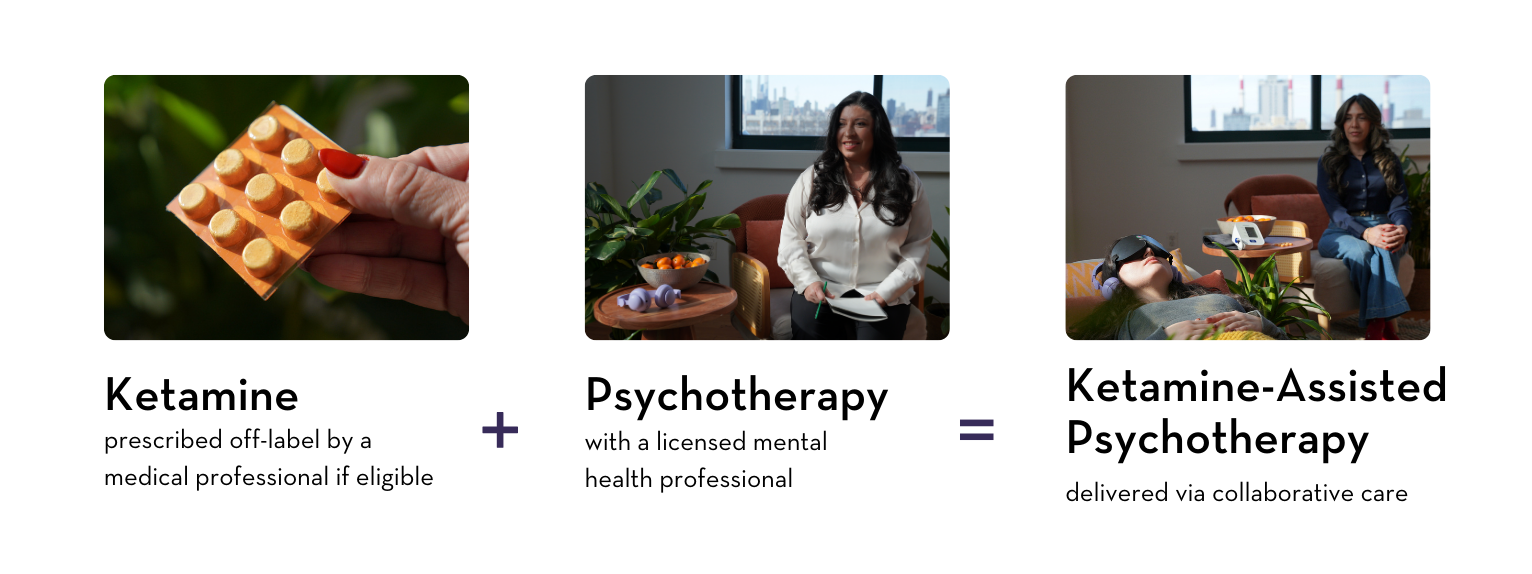
Read our full article learn more about KAP as a treatment model in detail.
Why Consider KAP for Anxiety?
Anxiety affects more than 40 million adults in the U.S according to NAMI (National Alliance on Mental Health). It’s one of the most common—and most debilitating—mental health challenges worldwide. While many people benefit from cognitive behavioral therapy (CBT), mindfulness, or medications such as SSRIs/SNRIs, a significant portion continue to experience:
- Chronic worry
- Rumination
- Panic episodes
- Specific phobias
- Social avoidance
- Somatic tension
- Emotional overwhelm
- Difficulty relaxing or sleeping
Traditional treatments often target the symptoms of anxiety (e.g. excessive worry, physiological arousal, looping thoughts) but they may not address the rigid neural and emotional patterns that underlie anxiety. KAP works differently. KAP addresses anxiety on two levels:
- Biological: Ketamine increases neuroplasticity; your brain’s ability to form new emotional and cognitive pathways.
- Psychological: Psychotherapy during this window helps patients access new perspectives and break out of entrenched thought patterns.
For many patients, KAP generally creates a sense of “internal spaciousness” where fear softens, the body relaxes, and the mind becomes more flexible. This can make therapy more effective, insight more accessible, and emotional change more sustainable.
How KAP Works for Anxiety (The Science Explained Simply)
Anxiety is maintained by predictable patterns in the brain: hyperactive fear circuits, rigid thought loops, and overactive limbic responses. KAP can interrupt these patterns and may allow new ones to form.
Here’s how:
Ketamine increases neuroplasticity.
- Ketamine antagonizes NMDA receptors and induces a transient hyperglutamatergic state, leading to increased AMPA receptor signaling and downstream molecular cascades. These processes are associated with increased BDNF expression and synaptogenesis, supporting enhanced neuroplasticity and the restoration of stress-related synaptic deficits. In simple terms, ketamine appears to create a temporary state of increased neural flexibility by increasing its ability to grow and reorganize. It does this by briefly boosting communication between brain cells and activating natural repair processes that support learning, emotional recovery, and resilience (link to research)
Rumination and cognitive rigidity reduce.
- A 2021 review of studies found that ketamine can rapidly reduce intense anxiety symptoms, which many people experience as feeling mentally “stuck” or trapped in distressing thought patterns. While the studies measured anxiety levels rather than specific thoughts, the symptom improvements were often fast and meaningful (link to research)
Emotional regulation improves.
- Many people with anxiety live in a constant state of hyperarousal — the nervous system is stuck in “on” mode. KAP can temporarily reduce this heightened stress response, including:
- Physical tension and bodily stress
- Hypervigilance and constant scanning for threat
- Fight-or-flight activation
By calming the nervous system, some patients feel safe enough to access emotions, reflect on their experiences, and engage more fully in therapy.
Psychotherapy becomes more effective.
- Ketamine appears to temporarily increase psychological flexibility — the ability to relate to thoughts and emotions with more openness and less reactivity. In this state, many people find it easier to:
- Examine fears with more distance
- Connect emotions with underlying thoughts
- Reconsider long-held beliefs
- Integrate insights from meaningful experiences
This is why Ketamine-Assisted Psychotherapy is not ketamine alone. The psychotherapy component helps translate insights into lasting behavioral and emotional change.
What the Research Shows About KAP for Anxiety
While the strongest evidence for ketamine is in depression, growing research supports its role in anxiety disorders.
Ketamine reduces anxiety symptoms rapidly.
Research: https://pubmed.ncbi.nlm.nih.gov/34925757/
- A 2021 review of clinical trials found that ketamine led to fast and meaningful reductions in anxiety symptoms in people with treatment-resistant anxiety, particularly social anxiety, with benefits also seen in related anxiety conditions.
Ketamine is effective for Social Anxiety Disorder (SAD).
Research: https://pmc.ncbi.nlm.nih.gov/articles/PMC5729569/
- A randomized, placebo-controlled crossover trial found that a single ketamine infusion produced significant reductions in social anxiety symptoms, with effects lasting up to two weeks. Ketamine was also associated with reduced social avoidance, suggesting improved engagement with social situations.
Ketamine with therapy shows enhanced durability.
Research: https://www.nature.com/articles/s41386-023-01606-3
- A growing body of research suggests that ketamine’s effects may last longer when combined with psychotherapy. Early studies indicate that pairing ketamine with targeted therapeutic interventions can help consolidate gains and support more durable symptom improvement.
Expected Outcomes for Anxiety
While no treatment works for everyone and outcomes are specific to each person, patients often report:
Within hours–days:
- Softer anxiety
- Reduced rumination
- Relaxed body tension
- Better sleep
- Improved emotional openness
Within weeks:
- Stronger coping skills
- Decreased avoidance
- Greater capacity for self-reflection
- More effective therapy sessions
Among others, the durability of outcomes is influenced by:
- Integration therapy
- Frequency of sessions
- Engagement with self-care and lifestyle practices
Anxiety doesn’t change in a straight line - below are examples of how core anxiety domains can evolve during treatment, from physiological softening to emotional and cognitive shifts.
Who Is a Good Candidate for KAP for Anxiety?
KAP may be a good fit if you experience:
- Generalized anxiety
- Specific phobias
- Social anxiety
- Panic disorder
- Health anxiety
- Anxiety related to trauma
- Anxiety resistant to medication or therapy
- Rumination or obsessive worry
Note that anxiety rarely exists in isolation. It is commonly comorbid with other mental health and medical conditions, including depression, PTSD and trauma-related disorders, intrusive thought patterns (including OCD-spectrum symptoms), chronic pain, sleep disorders, eating disorders, long-term stress and burnout or IBS and gut-brain axis-related symptoms among others. Therefore, it is important to work with your psychotherapist on all symptoms by taking a comprehensive, integrated approach rather than focusing narrowly on anxiety alone, allowing for accurate assessment, appropriate prioritization of treatment targets, and coordinated interventions that address the full clinical picture and underlying drivers of distress.
To be eligible for treatment, you must also be:
- Engaged in psychotherapy
- 18+ years old
- Medically cleared (on a case by case basis based on the patient's unique history)
- Have an eligible diagnosis
- Assessed for safety and clinical appropriateness by your treating clinician
Related Resources:
- KAP for Depression
- KAP for PTSD (coming soon)
When KAP Is Not Recommended?
Among others, KAP may not appropriate for individuals with unstable medical conditions, contraindicated psychiatric disorders or uncontrolled substance use disorder, including and not limited to:
- Uncontrolled hypertension or some hypertensive conditions
- Severe breathing problems
- Uncontrolled glaucoma
- Other unstable medical conditions (e.g. recent traumatic injury or certain cardiovascular conditions etc.)
- Acute mania or mixed state
- History of primary psychotic disorder
- Active suicidal ideation or severe psychiatric instability
- Active ketamine use disorder
- Ketamine allergy or hypersensitivity
- Pregnancy
These are evaluated during your medical intake by medical professionals alongside any other contraindications based on a full medical and psychiatric history.
Ketamine Risks & Side Effects
“Ketamine has been used worldwide in hospitals for decades. It’s on the World Health Organization’s list of essential medicines and used worldwide in hospital settings. Because of its high safety profile, Ketamine is commonly used in pediatrics. In the context of KAP, patients receive sub-anesthetic doses.”— Dr. Kwasi Adusei DNP PMHNP
Ketamine has a strong medical record. Ketamine has been used in medicine for more than 50 years, including in anesthesia, emergency care, pain management, and - more recently - mental health treatment. Across clinical applications, its safety profile is generally described in the literature as:
- Well-tolerated in controlled, clinician-supervised settings
- Rapidly cleared from the body (short half-life, effects are time-limited)
- Transient side effects are common, predictable, and dose-dependent
- Serious adverse events are rare when medical screening and monitoring protocols are followed
- Blood pressure elevation is the most clinically relevant physiologic effect, which is why protocols include blood pressure and heart rate checks before and after dosing
- Risk of dependence and bladder complications are primarily associated with frequent, chronic, unsupervised use, not with typical medical protocols
Common short-term side effects (most often during or within a few hours) include:
- Dissociation (feeling detached, “dreamlike,” time distortion) FDA Access Data+1
- Sedation / sleepiness / fatigue FDA Access Data
- Dizziness / vertigo / unsteadiness PMC+1
- Nausea (sometimes vomiting) PMC+1
- Headaches Nature
- Blurred vision / feeling “off” PMC+1
- Altered body awareness and spatial orientation
These effects are typically dose-related and time-limited, which is why many protocols include monitoring after dosing. In controlled clinical settings, these are often described as transient and generally mild–moderate, but they still matter for safety planning (no driving same day, fall risk precautions, etc.).
In summary, the clinical safety profile of ketamine is well-established when delivered under medical supervision, including systematic screening, monitoring, and human clinician approval for treatment plans and medication adjustments.
What KAP Treatment Looks Like (Step-by-Step)
Ketamine-Assisted Psychotherapy (KAP) is a therapist-led mental health treatment model that integrates both psychiatry (medical clearance, prescribing and ongoing monitoring) and psychotherapy (preparation, dosing, and integration sessions). You have a dedicated care team of experienced clinicians here to support you throughout your treatment.
Step 0: Choose your therapist
Before you initiate treatment, you choose a psychotherapist that matches your preference (e.g. location, specialty, insurance). The therapeutic alliance is essential to the successful completion of treatment.
Important distinction: The therapeutic component—not the medication alone—is what differentiates KAP from non-therapist ketamine treatment models. KAP is uniquely structured for emotional change, not only symptom reduction. The therapist’s role is not to direct the experience, but to provide psychological safety, trust, and support when needed. Read the full article on why the therapeutic alliance matter.
Step 1: Medical clearance & treatment planning
During this initial psychiatry visit, a qualified medical clinician evaluates your health history and symptoms to determine whether KAP is appropriate and safe for you. If eligible, you receive a personalized KAP treatment plan including a prescription for ketamine lozenges (or other approved ketamine formulations).
Step 2: Therapist-led preparation sessions
These psychotherapy sessions are similar to traditional therapy and tailored to psychedelic-informed care. You and your therapist explore:
- Your intentions for treatment
- Any fears or concerns about the experience
- Emotional readiness and trust-building
- What support you may need during dosing
Read more about preparation.
Step 3: Dosing session with monitoring & support from therapist
A typical ketamine dosing session lasts between 1-3 hours and can take place either in-person in your therapist office or remotely via telehealth. During a dosing session, patients self-administer their ketamine lozenge. Typically, patients are in a comfortable, reclining position wearing an eye mask and listening to calming music. Although a dosing session may be largely an internal experience, the therapist is present the entire time to hold space and provide support as needed. Common experiences may include:
- Visual imagery or dream-like scenes
- Emotional insights
- Shifts in perspective
- Relaxation or lightness
- Temporary dissociation
Step 4: Integration sessions for durable change
Within the days following dosing, you meet again with your therapist to process and translate what emerged into meaningful, lasting change. This is where transformation becomes durable. Integration often includes:
- Exploring the memories and insights that surfaced
- Understanding emotional or cognitive shifts
- Translating insights into behavioral and emotional change
- Reinforcing coping strategies and mental health progress
Integration supports durability in KAP treatment, similar to the role of integration in other psychedelic therapy models like psilocybin-assisted psychotherapy and MDMA-assisted therapy in clinical trials. Read more about integration.
Step 5: Follow-up with the medical team
You continue to follow-up with your dedicated medical professional to monitor safety, progress and outcomes of the treatment. They will prescribe medication refills as appropriate according to your treatment plan. For optimal treatment, it is recommended that your clinician manages all of your psychiatric medications.
While each treatment plan is personalized for each patient, it is common for a full KAP treatment to include 1 medical intake consultation, 1-3 preparation sessions with your therapist, 6-8 dosing sessions with at least 1 integration sessions between each dosing session. Maintenance dosing may be considered by your medical professional if appropriate.
Insurance & Cost
Understanding the financial investment for Ketamine-Assisted Psychotherapy (KAP) is an important part of planning your mental health care journey. Unlike many traditional therapy services, KAP involves both medical and therapeutic components — and because of that, insurance coverage and out-of-pocket costs may vary.
Important clarification: the medication ketamine itself is inexpensive in most formulations. What elevates the cost for KAP is clinical time, monitoring, integration support, and medical oversight — not the base price of the drug.
It is common for the full course of treatment of KAP to include:
- Matching patient with a therapist who accepts the patient’s insurance
- 4-6 months of treatment
- 2 medical consultations
- ~25 hours of psychotherapy with a KAP trained licensed psychotherapist
- Ketamine medication for 8 dosing sessions
In this case, the treatment would range from $1400-$1900 with insurance. Payment plans and financing can be available for patients to increase accessibility. To initiate treatment, a patient could make an upfront payment ~$120 followed by an agreed upon payment plan, if eligible for treatment.
Your care team would be able to guide you through your options.
Therapists Insights & Patients Stories
“One of my clients who was facing debilitating anxiety and obsessive thoughts, experienced relief from her symptoms after just a few sessions. My KAP clients have seen robust change in their lives, and KAP has been a helpful partner in our therapy. There’s a deepening that happens and a shift in perspective for the client that gives them a wider view of themselves and the world and what’s possible. The way that we see ourselves and see the world shifts.” — Julia Pinsky, LMFT
“What I’ve been able to see from my clients with severe anxiety is that for the first time, there’s space between them and their anxiety. I’ve had several journeys with my clients where they step back into the room and say ‘I didn’t know what it was like to not be depressed,’ and they talk about things they couldn’t talk about before. It’s magical.” — Denise M. Williams, LMFT
“My anxiety has drastically decreased, and I was able to face fear in a profoundly safe way. The dance therapy sessions that I have been doing alongside KAP helped me integrate this into my life in a powerful and long-lasting way.” — Chris, NY
“I have been working with a client in their late 50s. They have reported a significant increase in confidence in the workplace. This client has shared multiple examples of standing up for themself and their patients, and has gained the ability to use their voice with upper management in ways that they felt unable to do pre-KAP. This is incredibly exciting given that this client has been experiencing anxiety and depression since they were quite young!” — Dana McDowell, LPC
"My 62 yo client has been working on allowing her needs to be a priority. As the oldest of many children, with some trauma in childhood, a single parent for some years and then a mother to a total of three children in addition to being a teacher, she has often sidelined her wishes to meet the care needs of others. In today’s session she reported being held by her mother, feeling loved by her and by herself: “it was pink, puffy and soft.” She has been grateful for the shifts KAP has brought about. The change in her self-confidence and decrease in anxiety has been wonderful to witness. She also reports feeling sharper cognitively after being diagnosed with mild cognitive impairment a few years ago. " —Patricia Riggs, MSW, LICSW in MA
How KAP Compares to Other Anxiety Treatments
According to the National Alliance on Mental Health (NAMI), "The types of treatment proven to be most effective for many people experiencing an anxiety disorder involve a combination of psychotherapy and medication. Your preferences in a treatment plan are essential, however, so discuss the best approaches and options with your treatment team."
Among others, ketamine treatment can be helpful to patients who suffer from anxiety. See below some examples of various care models for ketamine therapy for anxiety.
Relief vs. deeper therapeutic healing: Other ketamine treatments focus on relief. In contrast, KAP may support deeper anxiety work by helping patients shift the emotional and cognitive patterns that drive anxiety, not only the physiology that carries it.
KAP vs at-home ketamine vs. IV Ketamine vs Spravato®
.png)
If you'd like to learn more about ketamine treatment options, read the full comparison guide.
Outside of ketamine modalities, there are other evidence-based therapeutic, medical, and lifestyle interventions that can help patients find relief, reduce avoidance, and stabilize the fear response that drives anxiety. Common approaches include
- Clinician-led psychotherapy: CBT for thought reframing, ACT for anxiety acceptance, IFS for emotional unburdening, EMDR for trauma-linked anxiety
- Prescription medications for calming physical anxiety signals (propranolol as an as-needed Rx medication to slow heart-racing and reduce body panic, SSRIs/SNRIs for baseline symptom relief)
- Neuro-based treatments such as TMS for brain modulation
- Lifestyle interventions and mindfulness-based therapy including exercise as a natural anxiolytic, breathwork or yoga for nervous system calming, and reducing caffeine or alcohol to prevent rebound anxiety.
What Makes Journey Clinical Different
Journey Clinical delivers KAP through a therapist-led, clinician-supervised care model built for real anxiety patients — especially those who feel stuck, overwhelmed, or previously treatment-resistant.
What’s different?
- 500,000+ hours of KAP delivered: Our clinicians have guided hundreds of thousands of hours of Ketamine-Assisted Psychotherapy, building deep expertise and consistent safety outcomes over time. Watch a demo of a KAP dosing session on YouTube.
- Therapist-first model: Care is guided by KAP-trained licensed psychotherapists embedded in a strong clinical community. Journey Clinical supports the largest network of KAP providers in the country, with ongoing peer learning, consultation groups, and shared clinical wisdom to continuously improve practice
- Integrated psychiatry + psychotherapy: A world-class medical team partners with therapists to take on comprehensive psychiatric medication management, dosing oversight, eligibility screening, and outcome monitoring alongside depth-oriented therapy.
- Deep anxiety work, not just relief: KAP at Journey Clinical pairs ketamine dosing with a structured preparation → dosing → integration protocol so patients can shift fear, avoidance, and emotional patterns that drive anxiety, not only temporarily reduce symptoms.
- Insurance support: Medical consultations and psychotherapy are often covered, reducing overall out-of-pocket costs for many patients when compared with standalone ketamine or clinic-only approaches. Check your insurance coverage here.
- Safety-focused protocols: Every patient undergoes comprehensive screening, informed consent, and strict dosing protocols, with continuous real-time support from a licensed clinician during KAP sessions — in person or remotely — plus monitoring of vitals and follow-up checks to ensure therapeutic efficacy and wellbeing. Read more on our dedicated safety page.
- Trauma-informed and ethically grounded care: Our approach is rooted in trauma-aware frameworks, professional guidelines, and ethical standards, ensuring each patient’s experience is safe, respectful, and aligned with best clinical practice.
In summary, Journey Clinical’s KAP model integrates psychiatric care, therapist-led therapy, and structured protocols to treat anxiety’s roots, not just its symptoms. Read more about how KAP works at Journey Clinical and what to expect from the treatment.
If you are curious to explore, watch a recording from a recent KAP 101 live info session on Youtube, visit our KAP education center or join an event near you.
Frequently Asked Questions
Does ketamine help with anxiety?
Studies show ketamine can rapidly reduce anxiety symptoms, especially when combined with therapy.
Is ketamine addictive?
In a clinical context, the therapeutic use of ketamine has a low risk of addiction. Misuse risks are discussed during medical intake medical evaluations.
“It's important to acknowledge that Ketamine can be misused. And although cases of dependence exist, the rates are much lower than opioids, alcohol, and stimulants. In a structured environment, we often see ketamine lessen maladaptive substance use rather than fuel it. Because it’s closely monitored and not freely refilled, the risk of addiction is quite low.” — Dr. Kwasi Adusei
How long does relief last?
Relief is variable depending on multiple factors, however some people feel better for days or weeks, sometimes even months post KAP; therapy extends durability.
Can I drive after KAP?
No. You need a safe ride home.
Is KAP safe?
When medically supervised and paired with psychotherapy, KAP is considered safe for many adults.
Is KAP covered by insurance?
Check your insurance coverage
Related Articles
How to choose a therapist for ketamine-assisted psychotherapy
Who is a good candidate for KAP and who isn't
How KAP works at Journey Clinical
Why psychotherapy matters in KAP
Understand ketamine treatment options: KAP vs. at-home ketamine vs. IV ketamine vs. Spravato
KAP library of research (30+ articles)
Ready to explore whether KAP could help your anxiety?
Deciding to explore a new treatment takes courage; especially when previous ones haven't worked. If you're ready to find out whether KAP could be a fit, our care team will walk you through the process from the first conversation. Get matched with a licensed psychotherapist and meet our medical team.