


.png)
Mental health treatment today is best understood as a continuum of care, rather than a single modality. According to organizations such as the National Alliance on Mental Illness (NAMI), SAMHSA, and the CDC, treatment for conditions like depression and anxiety typically includes:
- Psychotherapy with a licensed mental health professional
- Pharmacotherapy (e.g., medications such as SSRIs, SNRIs, other antidepressants)
- Lifestyle and supportive interventions (e.g. nutrition, movement, meditation etc.)
These approaches are often used in combination, reflecting the complexity of mental health conditions.
Ketamine-assisted psychotherapy (KAP) fits within this model as an emerging, integrative treatment that combines pharmacology and psychotherapy into a single, coordinated intervention.
What is Ketamine-Assisted Psychotherapy (KAP)?
Ketamine-assisted psychotherapy (KAP) is a clinical treatment that combines ketamine administration with structured psychotherapy, including preparation and integration sessions.
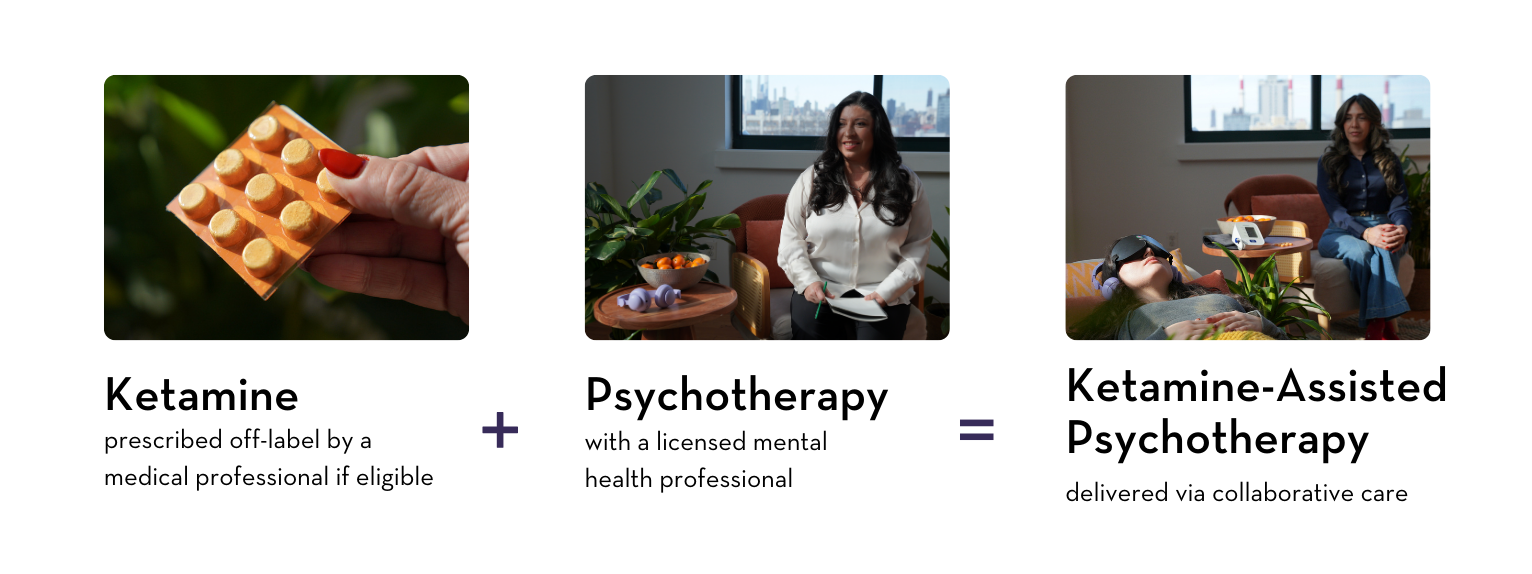
KAP typically includes:
- Preparation sessions to establish therapeutic intentions and context
- Ketamine sessions conducted in a controlled clinical setting
- Integration sessions to process and apply insights
KAP differs from standard medication management in that the therapeutic experience during treatment is part of the treatment.
If you’d like to learn more, read our full blog on what is KAP.
Depression and Anxiety Treatment Today
Mental health conditions such as depression and anxiety are common and widely treated in the United States.
- According to the National Alliance on Mental Illness (NAMI), more than 1 in 5 U.S. adults experience mental illness each year
- The CDC (National Health Interview Survey, 2023) reports that 11.4% of U.S. adults currently take prescription medication for depression, representing tens of millions of individuals
- NAMI notes that treatment for depression and anxiety typically includes psychotherapy, medication, or a combination of both, depending on individual needs
- The Substance Abuse and Mental Health Services Administration (SAMHSA) emphasizes the importance of access to a range of evidence-based and emerging treatments to improve outcomes across populations
Together, these data highlight that mental health care in the U.S. is multi-modal, with patients often engaging in a combination of therapeutic approaches over time.
KAP can be complementary to these approaches, expanding the range of available treatment options for patients.
Therapy vs. Psychiatry: A Functional Distinction
Psychotherapy
- Focuses on cognitive, emotional, and behavioral patterns
- Builds skills over time
- Typically requires consistent engagement over weeks to months
Pharmacotherapy
- Targets neurobiological mechanisms
- Reduces symptoms such as mood disturbance or anxiety
- Often involves daily, ongoing medication use
In practice, these approaches are often delivered in parallel but remain functionally distinct.
Where KAP Fits: An Integrated Clinical Model

KAP combines:
- A time-limited pharmacologic intervention (ketamine)
- A structured psychotherapeutic process
This creates a model where:
- Medication is used intermittently rather than continuously
- Psychotherapy is embedded within the treatment itself
Comparison of KAP vs. psychotherapy vs. medication treatments:

KAP can therefore be understood as a hybrid approach, integrating elements of both psychiatry and psychotherapy.
The Role of Time in KAP
Time is a key differentiator across treatment models.
Standard Treatments
- Antidepressants often require 4–6 weeks for noticeable effects
- Psychotherapy typically unfolds over months or longer
KAP
- Ketamine is associated with rapid effects on mood and cognition (hours to days)
- It promotes neuroplasticity, increasing the brain’s capacity to form new connections
- Administration is time-limited and episodic, rather than continuous
However:
- The psychotherapeutic integration process remains takes time
- Clinical outcomes depend on both the biological and psychological components
This creates a model where biological change may occur rapidly, while psychological change is developed over time.
KAP Within Interventional Psychiatry
KAP is part of a broader category known as interventional psychiatry, which includes:
- Ketamine-based treatments (KAP, IV ketamine)
- Psychedelic-assisted psychotherapy (PAP, in regulated settings)
- Transcranial Magnetic Stimulation (TMS)
- Electroconvulsive Therapy (ECT)
These approaches share common features:
- Targeted, time-limited interventions
- Active modulation of brain states
- Use in a range of clinical contexts, including more complex or treatment-resistant cases
This reflects a broader shift, supported by organizations like SAMHSA, toward expanding access to diverse and evidence-based treatment options.
Experiential Treatment vs. Algorithmic Care
Mental health care is also evolving with the introduction of AI-supported tools for diagnosis, monitoring, and prescribing.
These tools improve:
- Efficiency
- Measurement-based care
- Treatment selection
KAP operates differently.
KAP as an Experiential Treatment:
- Involves altered states of consciousness
- Emphasizes set (mindset) and setting (environment)
- Incorporates the patient’s subjective experience as part of treatment
In contrast, most pharmacologic treatments do not rely on the experience of the medication itself as a therapeutic component.
These approaches are not mutually exclusive; they represent different dimensions of care.
Key Takeaways
- KAP integrates pharmacology and psychotherapy into a single treatment model
- It differs from traditional psychiatry by using intermittent rather than daily medication
- It is part of interventional psychiatry, alongside TMS and ECT
- It introduces an experiential component that complements existing treatment approaches
- It fits within the broader framework of multi-modal mental health care described by NAMI, CDC, and SAMHSA
Frequently Asked Questions
What is ketamine-assisted psychotherapy used for?
KAP is used in clinical contexts for conditions such depression, anxiety and trauma/PTSD typically as part of a broader treatment plan that may include psychotherapy and/or medication.
How is KAP different from antidepressants?
Antidepressants are usually taken daily and work gradually over time. KAP uses intermittent ketamine sessions combined with psychotherapy, with effects that may occur more rapidly but still require integration over time.
Is KAP part of psychiatry or therapy?
KAP includes elements of both. It combines a pharmacologic intervention with a structured psychotherapeutic process, making it an integrated treatment model.
How long do the effects of KAP last?
The duration of effects varies by individual. Clinical outcomes depend on multiple factors, including the number of sessions and the integration process.
Who is a good candidate for KAP?
Eligibility depends on clinical evaluation. KAP may be considered within a broader treatment plan based on individual needs, history, and response to prior treatments. Read our full guide on what is a good candidate for KAP and who is not (coming soon!)
Related Articles
- Ketamine-assisted psychotherapy (KAP) research (curated library of 30+ research articles)
- Doing KAP With Journey Clinical
- Preparation and Integration for Ketamine-Assisted Psychotherapy
- Understanding the Cost of Ketamine-Assisted Psychotherapy (KAP) at Journey Clinical
- Ketamine and the brain
- Ketamine-assisted psychotherapy (KAP) for anxiety
- Ketamine-assisted psychotherapy (KAP) for depression
- What is ketamine-assisted psychotherapy (KAP)?
- Ketamine treatment options (KAP vs. IV vs. Spravato vs. at-home ketamine)
Client Education Resources
If you are a psychotherapist interested in integrating ketamine-assisted psychotherapy (KAP) in your practice, or a patient exploring treatment options, you can learn more about how KAP is delivered in clinical practice.