



What Is Ketamine-Assisted Psychotherapy (KAP)?
Ketamine-Assisted Psychotherapy (KAP) is a therapeutic modality that combines ketamine treatment with structured psychotherapy. It is a therapist-led mental health care model that integrates psychiatry and psychotherapy, supported by a dedicated care team of experienced clinicians.
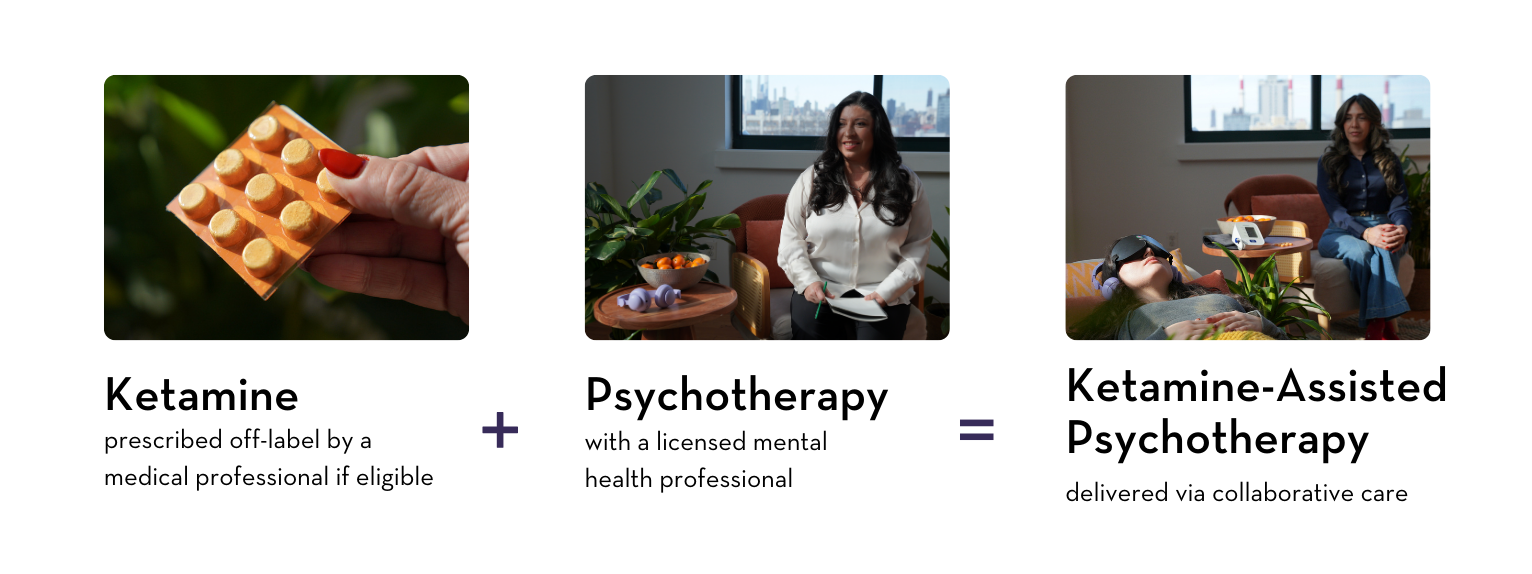
KAP is grounded in psychotherapy - prioritizing relationship, reflection, and continuity over the dosing experience itself - and supports change that is integrated, sustainable, and clinically meaningful. It helps patients shift the emotional and cognitive patterns that drive depression, anxiety, PTSD and other psychiatric conditions; not only the physiology that carries it.
Journey Clinical’s Collaborative Care Model
At Journey Clinical, ketamine treatment is paired with psychotherpy through a collaborative care model designed to lean into the therapeutic alliance between a psychotherapists and patients while ensuring medical safety.
Psychotherapists provide the therapy portion of KAP including:
- Preparation sessions
- Support during dosing sessions
- Integration seessions
Journey Clinical’s medical team ensure safety through:
- Medical clearance (eligibility)
- Customized treatment plans
- Ketamine prescriptions
- Ongoing outcome monitoring
How KAP Differs from Standalone Ketamine Treatment
Many people considering Ketamine-Assisted Psychotherapy want to understand how the experience differs from traditional talk therapy or standalone ketamine treatment. In KAP, your therapist is not simply present during the dosing session — they play an active clinical role throughout your entire treatment arc. Before any medication is prescribed, your therapist works with you to establish treatment goals, build trust, and prepare you for the experience ahead. During dosing sessions, the therapist provides a grounding presence and psychological support. Afterward, integration sessions help you process insights and translate them into lasting change. Journey Clinical's collaborative care model also means a dedicated medical team monitors your progress through structured outcome tracking at every stage. This layered approach combining medical oversight, therapeutic support, and ongoing assessment is what distinguishes KAP from other ketamine treatment options. It is designed to support not just symptom relief, but meaningful and sustained therapeutic progress.
You have a dedicated care team of experienced clinicians here to support you throughout your treatment.
What KAP Treatment Looks Like (Step-by-Step)
Step 1: Choose your therapist
Before you initiate treatment, you choose a psychotherapist that matches your preference (e.g. location, specialty, insurance). The therapeutic alliance is essential to the successful completion of treatment.
Important distinction: The therapeutic component—not the medication alone—is what differentiates KAP from non-therapist ketamine treatment models. KAP is uniquely structured for emotional change, not only symptom reduction. The therapist’s role is not to direct the experience, but to provide psychological safety, trust, and support when needed.
Step 2: Medical clearance & treatment planning
The KAP process begins with an evaluation by a KAP-trained clinician from Journey Clinical’s medical team.
During this consultation, the clinician will:
- Review medical and psychiatric history
- Provide education about Ketamine-Assisted Psychotherapy
- Assess safety and eligibility
- Discuss risks, benefits, and treatment goals
Learn more about who is a good candidate for KAP and who isn't. If the patient is eligible, the medical team develops:
- A personalized ketamine prescription plan
- A structured outcome monitoring plan
This ensures KAP is appropriate and medically supervised.
Step 3: Therapist-led preparation sessions
These psychotherapy sessions are similar to traditional therapy and tailored to psychedelic-informed care. You and your therapist explore:
- Your intentions for treatment
- Any fears or concerns about the experience
- Emotional readiness and trust-building
- What support you may need during dosing
If you'd like to learn more about preparation, read our full preparation & integration guide.
Step 4: Dosing session with monitoring & support from therapist
A typical ketamine dosing session lasts between 1-3 hours and can take place either in-person in your therapist office or remotely via telehealth. During a dosing session, patients self-administer their ketamine lozenge. Typically, patients are in a comfortable, reclining position wearing an eye mask and listening to calming music. Although a dosing session may be largely an internal experience, the therapist is present the entire time to hold space and provide support as needed. Common experiences may include:
- Visual imagery or dream-like scenes
- Emotional insights
- Shifts in perspective
- Relaxation or lightness
- Temporary dissociation
If you'd like to see how a dosing session unfolds, watch a full KAP dosing session video here.
Step 5: Integration sessions for durable change
Within the days following dosing, you meet again with your therapist to process and translate what emerged into meaningful, lasting change. This is where transformation becomes durable. Integration often includes:
- Exploring the memories and insights that surfaced
- Understanding emotional or cognitive shifts
- Translating insights into behavioral and emotional change
- Reinforcing coping strategies and mental health progress
If you'd like to learn more about preparation, read our full preparation & integration guide.
Step 6: Follow-up with the medical team
Journey Clinical’s medical team conducts regular follow-up appointments to:
- Monitor symptom improvement
- Assess safety
- Adjust treatment plans
- Prescribe refills when appropriate
- For optimal treatment, it is recommended that your clinician manages all of your psychiatric medications.
Follow-ups occur at a minimum of once per quarter, though frequency depends on the individualized care plan.
This ongoing oversight ensures that Ketamine-Assisted Psychotherapy remains safe, structured, and responsive to patient needs.
While each treatment plan is personalized for each patient, it is common for a full KAP treatment to include 1 medical intake consultation, 1-3 preparation sessions with your therapist, 6-8 dosing sessions with at least 1 integration sessions between each dosing session; a minimum of 1 consultation with the medical team is required; maintenance dosing may be considered by your medical professional if appropriate.
Insurance & Cost
Understanding the financial investment for Ketamine-Assisted Psychotherapy (KAP) is an important part of planning your mental health care journey. Unlike many traditional therapy services, KAP involves both medical and therapeutic components — and because of that, insurance coverage and out-of-pocket costs may vary.
Important clarification: the medication ketamine itself is inexpensive in most formulations. What elevates the cost for KAP is clinical time, monitoring, integration support, and medical oversight — not the base price of the drug.
It is common for the full course of treatment of KAP to include:
- Matching patient with a therapist who accepts the patient’s insurance
- 4-6 months of treatment
- 2 medical consultations
- ~25 hours of psychotherapy with a KAP trained licensed psychotherapist
- Ketamine medication for 8 dosing sessions
The full 4-6 months of treatment is estimated to range from $1400-$1900 with insurance. Payment plans and financing can be available for patients to increase accessibility. To initiate treatment, a patient could make an upfront payment ~$120 followed by an agreed upon payment plan, if eligible for treatment. Your care team would be able to guide you through your options.
In the meantime, enter your insurance details and learn more about KAP pricing now.

Frequently Asked Questions?
Is KAP safe?
When delivered within a structured collaborative care model with medical oversight and licensed psychotherapy support, KAP is considered safe for eligible patients.
Is KAP covered by insurance?
At Journey Clinical, we are in network with major payers, and always growing our insurance coverage. Read more on which insurance plans we accept at Journey Clinical or use our KAP treatment calculator to assess your specific costs.
How do you feel during KAP?
The direct effects of ketamine, which most patients find pleasant, last approximately 45 minutes. Many patients report feeling ‘far from’ their bodies, which can give the patient a chance to take a break from habitual thoughts and gain new perspectives on traumatic situations. During ketamine dosing sessions, motor and verbal abilities are typical reduced, so patients lie down in a comfortable position during the entire experience. The presence of the therapists
Related articles
Preparation and integration for KAP
Ketamine-Assisted Psychotherapy (KAP) for anxiety (research-backed guide)
Ketamine-Assisted Psychotherapy (KAP) for depression (research-backed guide)
For Therapists
Ready to bring ketamine-assisted psychotherapy into your practice? Learn how Journey Clinical supports licensed therapists with the clinical infrastructure, prescriber network, insurance pathways, ongoing training and community you need to offer KAP with confidence. Book a Demo →
For Patients
Looking for a KAP therapist near you? Browse our network of trained, licensed therapists offering ketamine-assisted psychotherapy across the country.Find a Therapist →