


Ketamine treatments have become an increasingly discussed option in mental health care for conditions such as depression, anxiety, PTSD and other psychiatric conditions. As awareness grows, many people encounter the term ketamine therapy. However, this phrase can be unclear. In practice, ketamine therapy is a broad umbrella term used to describe several treatment models that involve ketamine.
One of those models is ketamine-assisted psychotherapy (KAP) , a therapeutic approach that integrates ketamine treatment with structured psychotherapy. While both involve the use of ketamine, KAP differs from other ketamine treatment approaches because psychotherapy is central to the treatment process.
Understanding the distinction between these terms can help patients and clinicians better navigate the evolving landscape of ketamine-based mental health care.
What Is Ketamine Therapy?
Ketamine therapy refers broadly to treatments that use ketamine in a clinical context to address mental health conditions. Ketamine has been used in medicine for decades and was originally approved as an anesthetic. In recent years, clinicians and researchers have explored its potential effects multiple psychiatric conditions. Today, the term “ketamine therapy” may refer to several treatment models, including:
- Ketamine-Assisted Psychotherapy (KAP)
- At-home ketamine programs
- IV ketamine infusions
- Spravato (esketamine nasal spray)
- Although these approaches share the same medication or related compounds, they can differ significantly in clinical structure, supervision, and treatment philosophy.
What Is Ketamine-Assisted Psychotherapy (KAP)?
Ketamine-assisted psychotherapy (KAP) is a treatment model that combines ketamine administration with structured psychotherapy. Rather than focusing solely on the pharmacological effects of ketamine, KAP incorporates ketamine into a broader therapeutic process designed to support psychological exploration and integration.
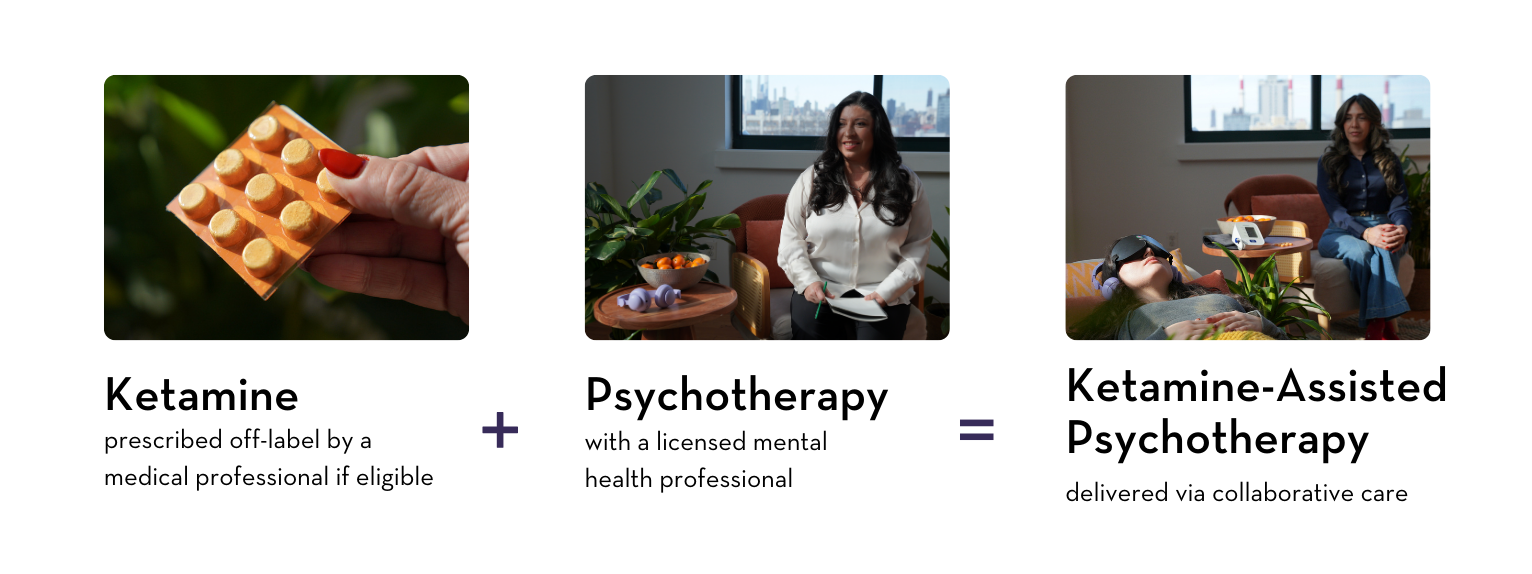
A typical KAP treatment framework includes three phases:
Preparation sessions: Before ketamine sessions begin, patients meet with a therapist to discuss treatment goals, emotional readiness, and intentions for the experience. Preparation helps establish psychological safety and therapeutic alignment.
Ketamine dosing sessions: Ketamine is administered in a controlled clinical setting while the patient is supported by a trained clinician. Patients may experience shifts in perception, emotional perspective, or cognitive patterns during the session.
Integration sessions: Following the experience, psychotherapy sessions help patients reflect on what emerged during treatment and translate insights into meaningful psychological and behavioral change.
Read the full guide on preparation and integration for KAP.
Ketamine Therapy vs. KAP: Key Differences
Although ketamine therapy and KAP both involve the use of ketamine, they differ in how treatment is structured and delivered.
In other words, KAP is one specific treatment model within the broader category of ketamine therapy.
Why Psychotherapy Matters in KAP
Ketamine may influence neural pathways involved in mood, emotional processing, and cognitive flexibility. Research suggests that ketamine can temporarily increase neuroplasticity, allowing the brain to form new patterns of thought and behavior. In psychotherapy-integrated models such as KAP, clinicians aim to use this window of increased psychological flexibility to support therapeutic work.
Psychotherapy during KAP may help patients:
- explore underlying emotional patterns
- process memories or experiences that emerge during treatment
- develop new perspectives on entrenched thought patterns
- translate insights into lasting behavioral change
Preparation and integration sessions provide structure for turning the experience into meaningful psychological progress rather than a standalone medical intervention. Learn more about why the therapeutic alliance is central to KAP.
Understanding the Different Ketamine Treatment Models
Because the phrase ketamine therapy is often used broadly, patients researching treatment may encounter several different care models. These approaches vary in their level of psychotherapy involvement, treatment environment, and clinical structure.
For a detailed comparison of the major ketamine treatment approaches, including IV ketamine infusions, at-home ketamine programs, and esketamine treatment with Spravato, read our full guide: KAP vs At-Home Ketamine vs IV Ketamine vs Spravato.
Frequently Asked Questions
Is ketamine therapy the same as ketamine-assisted psychotherapy?
No. Ketamine therapy is a general term that may refer to several treatment models using ketamine. Ketamine-assisted psychotherapy (KAP) is a specific model that integrates ketamine treatment with structured psychotherapy sessions.
Why does KAP include psychotherapy? Psychotherapy helps patients prepare for the ketamine experience, process insights that may emerge during treatment, and integrate those insights into lasting emotional and behavioral change.
Is KAP different from IV ketamine treatment? Yes. IV ketamine treatment is typically administered as a medical infusion in a clinical setting, while ketamine-assisted psychotherapy integrates psychotherapy before and after ketamine sessions. Read our full guide: KAP vs At-Home Ketamine vs IV Ketamine vs Spravato.
Is ketamine FDA-approved for mental health treatment? Ketamine itself is FDA-approved as an anesthetic. Some ketamine-related treatments, such as Spravato, are approved for specific psychiatric indications, while other uses of ketamine in mental health care may be prescribed off-label under clinical supervision.
Final Thoughts
Ketamine treatments for mental health are evolving rapidly, and the terminology surrounding them can sometimes be confusing. The phrase ketamine therapy is often used broadly to describe multiple treatment approaches involving ketamine. Ketamine-assisted psychotherapy (KAP), by contrast, refers to a specific therapeutic model that integrates ketamine administration with structured psychotherapy. By combining the biological effects of ketamine with preparation and integration sessions, KAP places psychotherapy at the center of the treatment process. Understanding these distinctions can help patients make more informed decisions when exploring ketamine-based mental health care.
Client Education Resources
- Patient Resource Center
- KAP Pricing Calculator
- KAP Info Session Recording
- Doing KAP with Journey Clinical
Are you a clinician looking to integrate KAP in your practice or a patient looking at KAP as a treatment option?