


In honor of Women's History Month, Journey Clinical hosted an expert panel webinar bringing together three licensed therapists who specialize in using Ketamine-Assisted Psychotherapy (KAP) to support women navigating mental health challenges and major life transitions. From generational trauma and identity reclamation to postpartum struggles, nervous system dysregulation, and the emotional weight of caregiving, the conversation illuminated something that clinicians are increasingly seeing in practice: KAP can open doors that talk therapy alone sometimes cannot.
This article is drawn directly from that panel, featuring insights and case examples from three remarkable practitioners: Natasha (Natty) Camille, LCSW, CST, Chrissy Powers, MA, LMFT, and Jessica Tomich Sorci, LMFT, along with clinical context from Sam Stroeh, PMHNP-BC, a psychiatric nurse practitioner on Journey Clinical's medical team.
To explore whether KAP may be right for you, take our eligibility quiz or get matched with a licensed provider in your state.
Key Takeaways:
- KAP can treat trauma, identity shifts, and life transitions where traditional talk therapy falls short
- Ketamine opens a window for new thought patterns and emotional flexibility
- KAP can reduce shame andboost self-compassion and emotional regulation
- KAP doesn't erase pain, but can reduce avoidance and soften the inner critic
- Body-based integration and somatic awareness are key to lasting trauma recovery
- Culturally affirming care is critical to effective KAP outcomes.
- Integration is where ketamine's effects translate into real, lasting change
Watch the full recording of the webinar on Youtube:
Why KAP? Understanding What Happens in the Brain
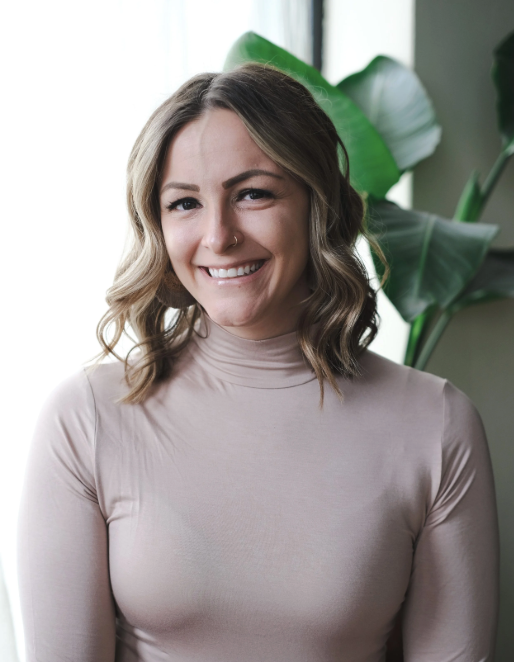
Before diving into the clinical insights from the KAP Provider therapists, Sam Stroeh, PMHNP-BC, a member of Journey Clinical's medical team, offered a grounding in the neuroscience of ketamine—and why its mechanisms make it particularly well-suited to the kinds of challenges many women bring into therapy.
"Ketamine is actually a dissociative anesthetic," Sam explained. "Sometimes it gets thought of as a psychedelic, but it does have psychedelic-like properties, which is how it kind of falls into that category. Most importantly, it promotes the growth of new connections—and this works differently from SSRIs."
The key mechanism: ketamine stimulates the growth of dendrites—the branching extensions that allow neurons to connect with one another. Over time, stress, trauma, and entrenched patterns of thought can prune those connections. Ketamine helps restore them.
Sam offered an analogy that stuck with the room: "You've got a ski hill with the typical blue, green, black diamond runs. Those are the pathways that have been ingrained over and over into the brain. Ketamine is like a fresh bed of snow—you can ski anywhere you want."
Beyond neuroplasticity, Sam highlighted what this window of openness looks like emotionally: "Ketamine dampens amygdala reactivity, enhances prefrontal modulation, and creates a window of emotional flexibility with reduced defensive rigidity. Shame can shift to compassion. Fear can shift to meaning."
For women specifically, Sam noted, "Ketamine can be especially useful for women who are processing trauma, abuse, generational trauma, identity shifts with life stage changes, and hormonal changes. It can allow someone to shift the narrative around previously fixed beliefs."
Medical professionals like Sam collaborate with therapists to care for their clients. They handle the medical aspects of the treatment via telehealth (intake, eligibility, prescription, outcome monitoring) while the therapist takes on the psychotherapy (preparation, dosing, and integration sessions). Learn more about this collaborative care model and how KAP works: KAP 101 at Journey Clinical
Reclaiming Identity and Intimacy: KAP with BIPOC and LGBTQIA+ Women

Natasha (Natty) Camille, LCSW, CST (they/them) is a relationship and AASECT-certified sex therapist based in New York and New Jersey, specializing in BIPOC and LGBTQIA+ communities. Their practice, Wildest Dreams Therapy, integrates attachment-based, somatic, and psychedelic-assisted therapies rooted in the traditions of Black, queer feminism and healing justice.
Natty brought to the panel a case that powerfully illustrates what KAP can offer when identity, embodiment, and cultural narrative are all in the room at once.
Their client—a Black, queer, cisgender woman in her late thirties—came to Natty having already done years of deep relational work. They built a therapeutic alliance over two years before introducing KAP at a pivotal juncture: the client was navigating complex decisions about family planning, confronting societal pressures about parenthood, and working through internalized shame about her body and her timeline.
"It took a lot of unlearning—a lot of narratives about who she should or should not be that were passed down from not only our broader society, but also internalized messages like my body is shameful," Natty said. "KAP really helped her to gain capacity for self-definition and for agency and for challenging these narratives that she internalized, narratives that really functioned as barriers."
Through the KAP process, something shifted: "She gained reverence for how she has been able to show up as a motherly figure to her friends' children, and also ways that she's felt mothered by women who were not her biological mother growing up. She was able to explore who she is outside of the confines of those narratives."
Natty was careful to emphasize that this kind of work requires not just clinical skill but cultural humility and identity-affirming care. "Doing integration work with affirming identity and affirming care in mind means taking seriously how race, gender, and all other identity-related factors come together to really shape a person's lived experience," they said. "Rather than trying to force some kind of universal interpretation of the insights that [clients] might've gotten, I really try to help them make meaning of those insights in a way that supports their agency and self-definition."
On somatic awareness, Natty connected the embodied dimension of KAP to a broader cultural reclamation: "Many of us have been socialized to not listen to our bodies—whether intentional or not. Building somatic awareness is central to my therapeutic work. We have a lot of memories, traumatic memories, that are stored in our bodies. Doing somatic work together in a session can increase that somatic awareness, which in turn gives clients more tools to regulate the nervous system and anchor the insights they're getting in the medicine sessions into their daily life."
To work with Natasha (Natty) Camille, LCSW, CST: wildestdreamstherapy.com | Licensed in New York and New Jersey
Getting in the Canoe: Somatic KAP for Trauma, Embodiment, and Religious Wounds
Chrissy Powers, MA, LMFT is a Southern California-based somatic relational therapist and female embodiment coach. Through her practice in Encinitas and intensive retreats in Los Angeles, Chrissy helps women move beyond anxiety, trauma, and self-doubt—specializing in religious trauma, body image, and nervous system regulation.
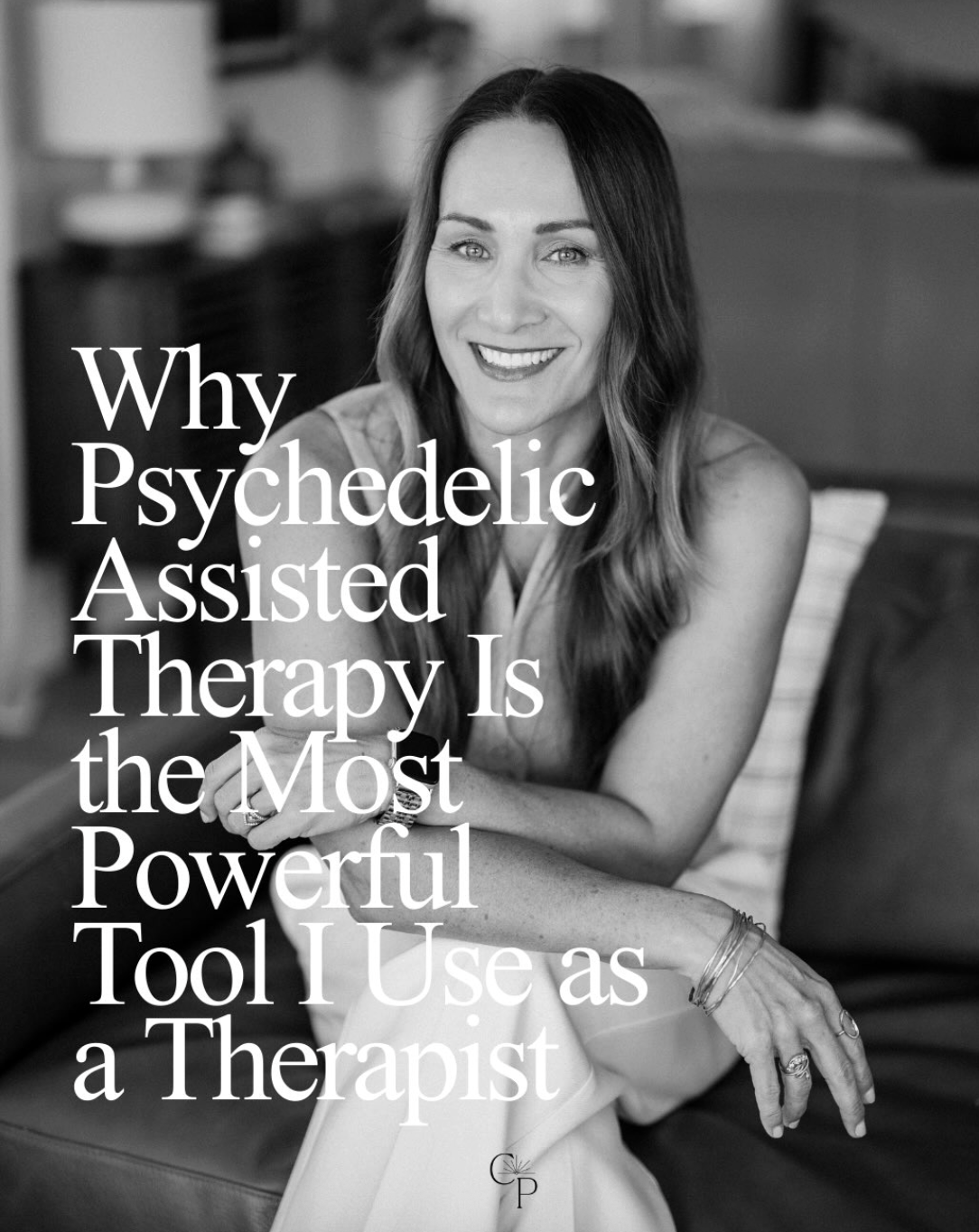
Chrissy described a client who came to her saying what many do: "I've done talk therapy for years, but I feel like I'm still stuck." There was church trauma, relational wounds, and something much older underneath—a history of childhood abuse that had been too large to name out loud.
What Chrissy offered wasn't distance. It was presence.
"There's a metaphor I use," she explained. "One [approach] is: I'm gonna put you in a canoe and send you down the river, and I'll see you on the other side. Another is: I'll put you in the canoe and I'll run alongside the riverbank with you. The third is: I'll get in the canoe with you."
With this client, Chrissy got in the canoe.
"In those states, that's often what the body actually needs—to be touched or held. We consent for everything and talk about it before. But during the session, I know the flow of the medicine now, and I can feel where the client is without them having to narrate it."
What became possible: "We really got access to the inner child wound, which definitely went all the way back to childhood. It was too big for this person to even name when they came in. And then in the session, we climbed the wall together. We sat on the wall for a minute. And then she saw the inner child."
The power of that witnessed moment extended beyond the session itself. "We are usually alone in our deepest pain and feel like no one else has seen it. What the body can register in these sessions is that now I'm not alone in it. I survived it. I found a witness."
Chrissy also addressed the role of KAP in working with dissociation, which is common in women with histories of trauma: "What you can do with ketamine and psychedelic therapy is work with dissociation—actually track when it's happening and be right there with them. It's not bad. She knew how to get safe. And then the next minute she was right there, looking at her inner child."
The integration phase, she emphasized, is where the threads are woven into daily life. "They stay with you. You remember it. I will even tell them: I was there. I remember what it felt like when you said you felt self-love for the first time. I remember the look on your face. That's something I can hold for them and bring back when they slip into old patterns."
To work with Chrissy Powers, MA, LMFT: chrissypowers.com | Based in San Diego and Encinitas, CA; retreat intensives in Los Angeles and Venice Beach
Mom Parts and the Medicine: KAP for Maternal Mental Health
Jessica Tomich Sorci, LMFT is a pioneer in maternal mental health and the creator of the Mom Parts model—a framework that uses Internal Family Systems (IFS) to help mothers understand and befriend the different "parts" of themselves that show up in parenthood. She is based in Santa Cruz, California, and trains clinicians in her Mother-Centered Approach.

Jessica's work rests on a foundational belief: mothers are not broken. What looks like struggle or failure is often a collection of parts—exhausted parts, resentful parts, scared parts—that have never been seen with compassion.
KAP, she has found, offers something that quiets one of the most persistent obstacles to that compassion: the inner critic.
"When the medicine is in the mix, there's just this huge kind of lifting off of that inner critic," Jessica shared. "That voice that's always asking whether we're doing the right thing for our kids, whether we're good enough moms, whether our kids' poor behavior is our fault because we didn't do it right—it quiets."
Jessica described how she runs KAP groups specifically for mothers, often using a deck of Mom Parts cards to help women identify which parts are most present for them. After setting an intention, participants go on their ketamine journey—and then come back together.
"There's still, it doesn't matter what kind of socioeconomic background or where you're from—motherhood has such universal, predictable parts that moms experience. And discovering that in the midst of a shared ketamine experience is especially moving. The aloneness dissolves."
What reliably emerges on the other side of that inner critic quieting? Curiosity.
"What emerges in people really spontaneously and kind of across the board is curiosity. Curiosity in their own experience—genuine interest in what's happening in me. That is pretty novel, I think, for most moms. We are conditioned to have our energy on other people."
In that moment of rediscovered self-interest, something fundamental reconnects. "It's now kind of like something has been reconnected inside. This is me and I'm precious and interesting to myself. I'm not just here to be of service to others."
Jessica shared a particularly moving example from long-term work with a client she had seen for twelve to thirteen years—a client who had made real progress in traditional therapy, but who only found a new dimension of healing after beginning KAP.
"Once I introduced ketamine, the first journey she took just blew everything open. She had new snow for the first time and she could ski anywhere. And the first moment where she realized, My gosh, I really love my husband—she didn't want me to tell him yet. She'd been holding a grudge. But over time that just kept coming up and we kept saying, okay, we work with this. She still has that flexibility even when she hasn't used the medicine for months."
To work with Jessica Tomich Sorci, LMFT: jessicatomichsorci.com | Based in Santa Cruz, CA; trains clinicians in the Mother-Centered Approach; offers KAP groups for moms
What Integration Looks Like for Women After KAP
All three therapists emphasized that the session itself is only part of the work. What happens in the weeks that follow—in integration—is where the medicine's insights become lasting change. Each described a practice that is deeply individualized.
Natty described integration as a collaborative conversation, not an analysis: "For each client, integration looks different. A client of mine who is an artist will make art in between sessions to process her experience. I always hold the intentions we set going into the session, and we return to those again and again—What was important for you to explore? What's coming up now?"
Chrissy described using emotional anchors: "I will even say: I was there. I remember what it felt like when you said you felt self-love for the first time. When I notice she slips back into old patterns—high-performing, finding her worth in productivity—I'll bring that moment back. They get in touch with it quickly now. I know, I remember that feeling."
Jessica noted that for many of her clients, integration takes care of itself: "It just keeps opening and opening. She's not the same person after two journeys. We continue to integrate and it keeps evolving. The contrast is so remarkable."
Frequently Asked Questions: KAP and Women's Health
What is Ketamine-Assisted Psychotherapy (KAP)? Ketamine-Assisted Psychotherapy (KAP) is a treatment that combines medically supervised ketamine with structured psychotherapy—including preparation before the session and integration afterward. At Journey Clinical, KAP is always delivered within a therapeutic alliance between a licensed mental health professional and the patient. The medical aspects (intake, prescription, and monitoring) are handled by Journey Clinical's in-house medical team in a collaborative care model.
How does KAP help women heal from trauma? Ketamine temporarily reduces activity in the amygdala (the brain's threat-detection center) and increases neuroplasticity—the brain's ability to form new neural connections. This creates what Sam Stroeh, PMHNP-BC describes as "a window of emotional flexibility with reduced defensive rigidity," allowing women to access traumatic material with less overwhelm and begin forming new patterns of thought and self-understanding.
Can KAP help with postpartum depression or maternal mental health? Yes. Jessica Tomich Sorci, LMFT, who specializes in maternal mental health, has developed KAP group programs specifically for mothers. She finds that ketamine reliably quiets the inner critic that plagues so many mothers—creating space for self-compassion, curiosity about one's own inner world, and meaningful shifts in identity.
Is KAP appropriate for BIPOC and LGBTQIA+ women? KAP can be deeply supportive when delivered with identity-affirming care. Natasha Camille, LCSW, CST, emphasizes that effective KAP integration for BIPOC and LGBTQIA+ clients requires a clinician who takes seriously how race, gender, sexuality, and cultural context shape a person's lived experience—and who supports the client's self-definition rather than imposing a universal framework.
What is somatic therapy and how does it work with KAP? Somatic therapy focuses on the wisdom of the body—noticing sensations, tracking nervous system responses, and working with the body as a site of healing, not just the mind. KAP creates a state in which the body's defenses soften, allowing somatic work to go deeper. As Chrissy Powers, MA, LMFT, describes it: "What the body can register in these sessions is that now I'm not alone in it. I survived it. I found a witness."
How long does it take to see results from KAP? Results vary by individual, but clients and clinicians frequently report meaningful shifts after just one or two sessions, particularly when integrated well with ongoing therapy. Jessica Tomich Sorci noted a client she'd seen for over a decade who experienced a transformational shift after her very first ketamine journey.
How do I find a KAP therapist through Journey Clinical? If you are a patient, Journey Clinical can match you with a licensed KAP provider in your state. If you are a therapist interested in offering KAP through your practice, you can learn more and apply to join Journey Clinical's provider network at journeyclinical.com.
About the Panelists
Natasha (Natty) Camille, LCSW, CST (they/them) is a relationship and AASECT-certified sex therapist specializing in BIPOC and LGBTQIA+ communities. Their practice, Wildest Dreams Therapy, integrates attachment-based, somatic, and psychedelic-assisted therapies rooted in Black, queer feminist and healing justice traditions. Licensed in New York and New Jersey. wildestdreamstherapy.com | hello@wildestdreamstherapy.com
Chrissy Powers, MA, LMFT is a Southern California-based somatic relational therapist and female embodiment coach who helps women move beyond anxiety, trauma, and self-doubt. She specializes in religious and spiritual trauma, body image, and nervous system regulation, and offers individual therapy, intensives, and retreat-style KAP experiences. chrissypowers.com | @chrissyjpowers on Instagram
Jessica Tomich Sorci, LMFT is a pioneer in maternal mental health and creator of the Mom Parts model, which uses IFS parts work to reframe how we understand mothers' distress and support their healing. She offers KAP groups for mothers and trains clinicians in her Mother-Centered Approach. Based in Santa Cruz, CA. jessicatomichsorci.com
Sam Stroeh, PMHNP-BC is a psychiatric nurse practitioner on Journey Clinical's medical team, certified in both psychiatric and primary care. She sees Journey Clinical patients in Wisconsin and Ohio and is passionate about helping clients understand KAP from a medical lens, particularly for complex trauma disorders.
Interested in KAP for yourself or a loved one? Get matched with a Journey Clinical provider in your state. Are you a therapist interested in offering KAP in your practice? Learn more about joining Journey Clinical.